The Best AI Analytics Platform for CPG Commercial Teams

Ask questions in plain English—"What was ROI on last month's Walmart promotions?" "Why did share drop at Kroger?" "Which SKUs should we propose adding at Target?"—and get instant answers. No SQL, no analyst queues, no 3-week wait.

The semantic layer understands CPG vocabulary—TPR, BOGO, ACV, TDP, lift, incrementality—so queries don't require translation. Revenue Growth Managers, Category Managers, and Key Account Managers get the analysis that used to require dedicated projects.

See Tellius in Action

What is CPG AI Analytics?

CPG AI analytics deploys AI agents to perform analysis on commercial data—investigating performance changes, decomposing growth drivers, and delivering explanations automatically. Unlike dashboards that show what happened and wait for humans to interpret, AI analytics explains why it happened and recommends what to do next.

Tellius is the leading AI analytics platform purpose-built for CPG. It combines a CPG-native semantic layer with AI agents that automate the investigative work analysts do manually—root cause analysis, growth decomposition, promotional measurement, pricing gap identification. Decisions that took days now happen overnight.

The Problem

Every question goes into a queue. By the time answers arrive, the window to act has closed.

Problem

Insights arrive after the meeting

Leadership asks why private label gained 2 points. Nobody can answer. The follow-up takes a week—by then, the conversation moved on and the decision got made without data.

Every team defends different numbers

Nielsen says one thing, retailer POS says another, shipments say a third. The first 30 minutes of every meeting is spent arguing whose spreadsheet is right.

The "why" costs 3 weeks and 40 analyst hours

You see share declined 2 points. Why? That's a separate project. By the time root cause arrives, you've already moved to the next fire.

Promotions run blind

Post-event analysis arrives after next year's calendar is locked. You're optimizing based on what worked two quarters ago, not what's working now.

Analysts drown in ad-hoc requests

Strategic projects sit untouched while analysts churn through "can you pull this?" requests that pile up faster than they clear.

Solution

Plain-language queries for CPG data

Ask "Why did share drop at Kroger?" and get a governed answer instantly—no SQL, no ticket, no waiting.

CPG-native semantic layer

Platform understands ACV, TDP, lift, incrementality, fair share index natively—no translation between business questions and technical queries.

Syndicated + retailer data unification

Nielsen, Circana, Walmart Luminate, Kroger 84.51° harmonized automatically—one truth instead of five conflicting exports.

Automated growth decomposition

AI decomposes performance into distribution, price, velocity, and promo effects—the "why" analysis that used to take weeks.

Promotional lift and scenario modeling

Forecast expected lift before committing spend; measure actual ROI within days of event completion.

The Results

The Payoff from Deploying AI Analytics for CPG Commercial Teams

3
Weeks faster time-to-insight

When root cause analysis happens in seconds instead of analyst queue cycles

80%
Reduction in ad-hoc analyst requests

When business users get their own answers instantly

5+
Data sources unified

Syndicated, retailer, trade, and internal—into a single governed semantic layer

10x
More questions answered per analyst

When repetitive analysis is automated

How It Works

How AI Analytics Works for CPG

Unify

Connect syndicated data (Nielsen, Circana), retailer data (Walmart Luminate, Kroger 84.51°), trade data (SAP TPM, Exceedra), and internal systems into a CPG-native semantic layer that understands your business vocabulary. No more reconciling conflicting numbers across five different exports.

Explain

Ask any question—"Why did velocity drop at Target?" "What drove the share swing vs. private label?"—and get instant answers with automated root cause analysis decomposing performance into distribution, price, rate of sale, and promotion effects.

Act

Build live dashboards with VizPads, trigger alerts when metrics move, and deliver predictive models that forecast demand, flag at-risk SKUs, and optimize promotional calendars before committing spend.

Questions & Answers

What's Inside This Guide

Below, we've organized real questions from CPG commercial leaders into five parts. Every answer is grounded in actual practitioner challenges across category management, trade promotion, revenue growth management, and retailer analytics.

Part 1: AI Analytics for Category Management

How AI analytics platforms help Category Managers get instant answers, unify syndicated data, and eliminate analyst bottlenecks

1. How does AI analytics help Category Managers get answers without waiting for analysts?

The traditional workflow when a Category Manager needs to understand why private label gained share: notice it in a report, submit a request to analytics, wait 2-3 weeks for the deep dive, receive a PowerPoint, ask follow-up questions, wait again. By the time you understand what happened, you've missed the window to respond.

AI analytics compresses this into a conversation. You ask "Why is private label taking share in cereals at Kroger?" and receive an answer in seconds—with the performance change decomposed into distribution, pricing, and velocity components, and drivers ranked by contribution.

The critical difference is instant access that actually works for business users. Category Managers ask questions in their own vocabulary—"fair share," "rate of sale," "ACV weighted distribution"—and the semantic layer translates to the correct data queries automatically. No SQL, no data model knowledge, no intermediary.

This doesn't eliminate analysts. It handles the 80% of questions that follow predictable patterns, freeing analysts for strategic work: negotiation strategies, long-term assortment planning, competitive response scenarios that require human judgment.

2. What makes a semantic layer "CPG-native" and why does it matter for category analytics?

A semantic layer creates an abstraction between business concepts and technical data structures. A "CPG-native" semantic layer understands category management vocabulary out of the box—you don't need to define what "fair share index" means or how to calculate "rate of sale" every time you ask a question.

When you ask about "dollar share in grocery," the semantic layer knows to query the correct Nielsen measures, apply the right channel filter, and calculate share using the appropriate denominator. You don't need to know that "grocery" maps to a specific channel code in this particular data feed.

Why this matters: without native CPG understanding, every question requires translation. Business users ask in their language, analysts translate to technical queries, results get translated back to business terms. Each translation introduces delay and potential error.

With a CPG-native semantic layer, "fair share index" means the same thing every time, calculated the same way, regardless of who asks. Cross-source queries that combine Nielsen syndicated data with Walmart Luminate data happen automatically—the system handles the join logic, calendar reconciliation, and hierarchy mapping.

3. How do CPG companies use AI analytics to unify Nielsen, Circana, and retailer data for category analysis?

CPG category teams typically pull from 5+ data sources: Nielsen or Circana syndicated data, retailer-specific platforms (Luminate, 84.51°, Roundel), internal shipment data, trade spend systems, and competitive intelligence feeds. Each source uses different hierarchies, time periods, and metric definitions.

Traditional approach: export data from each source, manually reconcile in Excel, spend hours resolving conflicts before any analysis can begin. This work repeats for every project because the reconciliation isn't preserved.

AI analytics approach: connect to all sources through pre-built connectors. The semantic layer maintains persistent mappings between sources—how Nielsen weeks align to Kroger's fiscal calendar, how product hierarchies match across systems, how "same store sales" is defined differently by each retailer.

When you ask a question that requires multiple sources—"How does our share trend at Walmart compare to total market?"—the system queries both Luminate and syndicated data, reconciles the time periods and product definitions, and returns a unified answer. The reconciliation logic is encoded once and applied automatically to every query.

4. Can AI analytics automatically decompose category growth into distribution, price, and velocity drivers?

Yes—and this automation is one of the highest-value capabilities for category teams.

Traditional growth decomposition requires pulling volume and value data across time periods, calculating distribution changes (ACV gains/losses), isolating price effects (mix shift, rate changes), measuring velocity changes (rate of sale per point of distribution), and attributing the residual to new product contribution. This analysis typically takes 2-3 weeks of analyst time.

AI analytics runs this decomposition automatically. Ask "What's driving the revenue decline in snacks at Target?" and receive a quantified breakdown: distribution losses contributed 40% of the decline, pricing gap widening contributed 35%, velocity decline contributed 25%. Each component links to supporting detail you can drill into.

The decomposition methodology is encoded in the semantic layer, so calculations are consistent across every query. No more debates about whether the analyst used the right baseline or applied the correct formula. More importantly, decomposition becomes accessible for any question, not just major quarterly reviews.

5. What questions can Category Managers answer instantly with AI analytics that previously required analyst projects?

The shift is from "submit a request and wait" to "ask and know immediately." Examples of questions that become instant:

Performance diagnosis: "Why did our snack share drop 1.5 points at Kroger last month?" Returns decomposition by driver (distribution, pricing, velocity, competition) with quantified contribution from each.

Competitive intelligence: "How has private label grown in cereals over the last 52 weeks, and which of our SKUs lost share to them?" Returns trend analysis with specific product-level attribution.

Distribution analysis: "Where are we losing ACV in the Midwest region?" Returns retailer-by-retailer breakdown with specific stores and timing.

Pricing gaps: "How does our price index compare to category average by retailer?" Returns indexed pricing across accounts with historical trend.

Each of these previously required an analyst to scope the question, pull data, build the analysis, and deliver results—typically 3-5 days minimum. With AI analytics, the answer arrives in seconds, and follow-up questions get answered immediately rather than starting a new request cycle.

6. How does AI analytics handle the complexity of syndicated data hierarchies and time period definitions?

Nielsen and Circana data is notoriously complex. Product hierarchies have multiple levels (department, category, subcategory, segment, brand, UPC). Geography hierarchies span markets, regions, channels, and accounts. Time periods use different definitions (Nielsen weeks vs. calendar weeks vs. fiscal periods).

Most Category Managers can't query this data directly—they depend on analysts who understand the technical structure. This creates the bottleneck that slows down every question.

AI analytics solves this through the semantic layer: Hierarchy abstraction—when you ask about "snack category," the system knows which hierarchy level that maps to in each data source. Time period intelligence—the system understands that "last quarter" means different date ranges depending on your fiscal calendar. Cross-source reconciliation—when a question requires joining syndicated data with retailer data, the system resolves the hierarchy and time period mismatches automatically.

The result: Category Managers ask questions in business terms and receive answers without understanding the underlying data engineering.

Part 2: AI Analytics for Trade Promotion

How AI analytics platforms help RGMs and Trade Marketing teams measure promotion performance and model scenarios

1. How does AI analytics accelerate trade promotion measurement from weeks to days?

Traditional post-event analysis takes 2-3 weeks per promotion because every step requires manual work: extract POS data, validate and clean, calculate baseline sales, measure lift against baseline, adjust for cannibalization and pantry loading, compute ROI, assemble the summary. Analysts can only process so many promotions simultaneously.

AI analytics automates the mechanical steps:

Automated baseline modeling: The system learns normal selling patterns by SKU, store, and time period—adjusting for seasonality, trends, and prior promotional effects. No analyst needs to manually define baselines for each event.

Real-time lift calculation: As POS data arrives during and after promotions, lift metrics calculate automatically. Preliminary results are available within days of event completion.

Standardized methodology: ROI calculations apply consistently using the same incremental revenue and cost definitions. No more inconsistent spreadsheets with different assumptions across brands or analysts.

Revenue Growth Managers get promotion results in days instead of weeks. More importantly, results are available early enough to inform the next promotional decision rather than documenting what happened after the planning window closed.

2. Can AI analytics model promotional lift before we commit trade spend?

Yes. Predictive promotion modeling uses historical performance data to estimate expected lift for proposed promotions before budget commitment.

Pattern recognition: The system analyzes thousands of past promotions to identify which factors drive lift—price depth, tactic type (TPR, display, feature), retailer, timing, competitive context, base velocity. These patterns become prediction anchors.

Similar event matching: For a proposed promotion, the model identifies historically similar events and uses their outcomes as the starting point. A proposed 20% TPR at Kroger for laundry detergent references past TPRs at Kroger for laundry detergent—not unrelated events.

Context adjustment: The base prediction adjusts for factors that differ from historical events—different price point, different timing, changed competitive landscape.

Confidence ranges: Predictions include uncertainty bounds. A promotion with many similar historical events has a tight confidence range; a novel promotion has wider uncertainty.

Revenue Growth Managers use these predictions during planning and JBP negotiations. Instead of committing based on historical precedent and negotiation pressure, they evaluate expected ROI for different scenarios and allocate to highest-return opportunities.

3. How does AI analytics separate true incremental volume from pantry loading and cannibalization?

This is one of the most contentious problems in trade promotion measurement. Promotional volume isn't all "incremental"—some comes from consumers buying early (pantry loading), some comes from adjacent products in your own portfolio (cannibalization). Traditional measurement often overstates ROI by ignoring these effects.

AI analytics addresses each component:

Pantry loading detection: The system analyzes post-promotion periods for volume dips that offset promotional lift. If consumers bought during the promotion instead of the following week (not in addition to), that volume isn't truly incremental.

Cross-product cannibalization: When one SKU is promoted, adjacent SKUs often decline. The system tracks these halo and cannibalization effects across your portfolio, attributing volume shifts to their promotional causes.

Competitive source-of-volume: Some promotional volume comes from competitors; some comes from your own products. The system distinguishes based on category and brand-level movement patterns.

Each promotion gets decomposed into: true incremental volume, pantry loading (time-shifted volume), cannibalization (portfolio-shifted volume), and competitive gains. This complete picture reveals which promotions genuinely grew the business versus which just moved volume around.

4. What trade promotion questions can Revenue Growth Managers answer instantly with AI analytics?

The shift from "wait for the post-event report" to "ask and know now":

Performance comparison: "Which promotion tactics delivered the highest ROI last quarter, and how did that vary by retailer?" Returns ranked analysis with statistical confidence.

Spend optimization: "If we shift $500K from TPRs to displays, what's the expected impact on incremental volume?" Returns scenario model with projected outcomes.

Retailer benchmarking: "How does our promotional effectiveness at Walmart compare to Target and Kroger?" Returns indexed comparison with driver analysis.

Timing analysis: "What's the optimal promotional cadence for Brand X—are we over-promoting or under-promoting?" Returns frequency analysis against historical response curves.

Competitive response: "How did competitor promotions affect our promoted volume last month?" Returns attribution analysis isolating competitive impact.

Each question returns an answer in seconds with supporting analysis you can drill into. Follow-up questions get answered immediately rather than requiring a new analyst request.

5. How does AI analytics help RGMs identify which promotions to repeat and which to eliminate?

The challenge isn't knowing that 70% of promotions don't break even—it's knowing which 70%. Traditional measurement is too slow and selective to evaluate every event comprehensively.

AI analytics enables systematic promotion evaluation:

Comprehensive scoring: Every promotion receives ROI, incrementality, and efficiency scores using consistent methodology. No sampling, no selective analysis—complete coverage.

Pattern identification: Across hundreds of promotions, the system identifies which combinations of factors (retailer + tactic + timing + price depth) consistently deliver returns versus which consistently underperform.

Outlier surfacing: Promotions that significantly outperform or underperform expectations get flagged automatically. Positive outliers represent practices to replicate; negative outliers represent practices to eliminate.

What-if modeling: Before eliminating a promotion from next year's plan, model the expected impact. Some low-ROI promotions serve strategic purposes (competitive defense, retailer relationship) that pure financial analysis misses.

RGMs shift from defending last year's plan to systematically improving it—with evidence that survives scrutiny from Finance and Sales.

6. How should CPG companies evaluate AI analytics platforms for trade promotion use cases?

Push beyond generic capability claims with specific tests:

Baseline methodology: "Walk me through exactly how you calculate baseline for a promoted item. What statistical approach, what data inputs, how do you handle edge cases like new products?" Vendors who can't explain methodology in detail probably don't have a rigorous one.

Incrementality decomposition: "Show me how you separate true incremental volume from pantry loading and cannibalization." This is where many vendors fall short—they measure total lift but miss the offsetting effects.

Data integration: "Which syndicated and retailer data sources connect natively? How long does integration take?" Generic platforms claim universal connectivity but require months of custom work. CPG-native platforms have pre-built connectors.

Prediction validation: "What's the typical error rate for promotional lift predictions? Show me backtesting results comparing predicted vs. actual." Vendors who can't demonstrate prediction accuracy probably haven't built real predictive capability.

Timeline to value: "How long from contract to live trade promotion analytics?" Generic platforms quote 6-12 months. CPG-native platforms deploy in 8-12 weeks.

Part 3: AI Analytics for Revenue Growth Management

How AI analytics helps RGMs decompose growth drivers, identify pricing opportunities, and model scenarios

1. How does AI analytics automate growth decomposition for Revenue Growth Management?

Growth decomposition—breaking revenue changes into price, volume, and mix components—is fundamental to RGM. Understanding whether growth comes from selling more units, getting better prices, or shifting to higher-value products drives entirely different strategic responses.

Traditional decomposition requires substantial spreadsheet work and typically runs quarterly because of the effort involved. AI analytics runs decomposition continuously:

Automated calculation: Price, volume, and mix effects calculate automatically as data refreshes. No analyst rebuilds the analysis each period; it's always current.

Multi-level drill-down: Start with total portfolio, drill into categories, then brands, then SKUs. At each level, see how price/volume/mix contribution shifts. What looks like healthy growth at portfolio level might mask unfavorable mix shift at SKU level.

Variance attribution: For any revenue variance—plan vs. actual, year-over-year, period vs. period—the system attributes the change automatically. "Why did we miss revenue by $5M?" gets answered in seconds with quantified drivers.

RGMs shift from periodic decomposition exercises to continuous visibility. When unfavorable mix shift starts emerging, you see it immediately—not three months later in the quarterly review.

2. How does AI analytics help RGMs identify pricing opportunities across retailers and SKUs?

Pricing opportunity identification traditionally requires extensive manual work: pull competitive pricing by retailer, calculate gaps by SKU, index against category, prioritize by volume impact. Most RGM teams can only complete this quarterly.

AI analytics automates discovery:

Continuous price gap monitoring: Track your pricing relative to competition across retailers continuously—not as a quarterly project. When gaps emerge or close, know immediately.

Opportunity quantification: For every pricing opportunity, estimate volume and revenue impact based on historical elasticity. "You're priced 8% below category average at Target; closing half that gap would add $2.3M revenue with minimal volume risk."

Retailer-specific context: Pricing dynamics differ by retailer. Identify where you have pricing power (strong brand position, limited competition) versus where increases risk volume loss.

Long-tail coverage: Manual analysis focuses on top SKUs and major retailers. AI analytics identifies opportunities across the full portfolio—including smaller SKUs and secondary accounts where cumulative opportunity is significant.

Anomaly detection: When pricing anomalies emerge—unexpected gaps, competitive moves, inconsistencies across your own portfolio—the system surfaces them automatically.

3. Can AI analytics model gross-to-net impacts and identify revenue leakage?

Gross-to-net leakage—the gap between list price revenue and actual net realized revenue—erodes margin across trade spend, promotional allowances, deductions, and reconciliation errors.

AI analytics identifies and quantifies leakage:

Deduction monitoring: Track deduction patterns by retailer, product, and claim type. When deductions spike or deviate from historical patterns, surface the anomaly—often identifying errors or unauthorized claims before they become entrenched.

Trade spend effectiveness: Not all trade spending delivers equal return. Identify which investments drive incremental volume versus which fund behavior that would have happened anyway.

Contract compliance: Trade agreements specify conditions for promotional support. Track whether performance thresholds were met, whether deductions match contracted terms, whether claimed volumes align with shipments.

Leakage quantification: For every identified issue, quantify the financial impact. Prioritization ensures teams focus on largest opportunities first.

CPG companies typically find 1-3% of gross revenue in addressable leakage. On a $500M brand, that's $5-15M in profit improvement—often the highest-ROI application of AI analytics.

4. How do RGMs use AI analytics to prepare for pricing negotiations with retailers?

Pricing negotiations require data-backed positions. Walking into a buyer meeting with "we need a price increase" without supporting analysis invites pushback. Walking in with quantified scenarios changes the conversation.

AI analytics enables negotiation preparation:

Scenario modeling: "What happens if we increase price 5% at this retailer?" Model expected volume impact, revenue change, and margin improvement using historical elasticity data.

Competitive positioning: "How does our pricing compare to alternatives the buyer could substitute?" Understand your competitive price position before the negotiation.

Portfolio impact: Price changes on one SKU affect adjacent products. Model cannibalization and halo effects across your portfolio.

Retailer-specific evidence: Build the case with retailer-specific data. Category trends, your brand's contribution, pricing gaps versus competition—all sourced from the same platform.

Real-time follow-up: When buyers counter with alternative terms, model implications on the spot. "If we accept 3% instead of 5%, here's the margin impact" happens during the meeting, not after a week of analysis.

5. What growth and pricing questions can RGMs answer instantly with AI analytics?

Questions that shift from "request an analysis" to "ask and know":

Growth attribution: "What's driving the revenue variance versus plan this quarter?" Returns P/V/M decomposition with drill-down to contributing products and accounts.

Pricing gaps: "Where are we under-priced relative to competition, and what's the revenue opportunity?" Returns prioritized list with quantified potential.

Mix analysis: "Is our mix shifting toward higher-margin or lower-margin products?" Returns trend analysis by margin tier with contributing SKUs.

Elasticity queries: "What price increase can we take at Kroger before volume loss exceeds revenue gain?" Returns elasticity-based threshold analysis.

Gross-to-net: "Where is our net revenue realization weakest, and why?" Returns account-level GTN analysis with driver decomposition.

Each answer arrives in seconds. Follow-ups get resolved immediately rather than starting new request cycles.

6. How does AI analytics help RGMs communicate pricing strategy to Finance and Sales?

Pricing recommendations without supporting analysis invite skepticism. "Trust me, we should raise prices" doesn't survive challenge from Finance or pushback from Sales.

AI analytics provides defensible evidence:

Consistent methodology: Decomposition and scenario models use documented, repeatable calculations. When Finance questions the analysis, you show the methodology—not a spreadsheet only you understand.

Audit trail: Every recommendation traces to source data and calculation steps. Governance and compliance requirements get satisfied automatically.

What-if transparency: When Sales argues "we'll lose the business if we raise prices," model the scenario explicitly. Either the data supports their concern, or it doesn't—but the debate moves from opinion to evidence.

Shared access: Finance and Sales can run the same queries and see the same results. Disagreements shift from "your numbers are wrong" to "we interpret the implications differently"—a more productive conversation.

Executive-ready outputs: Analysis exports directly to presentation formats. The path from insight to leadership communication doesn't require rebuilding in PowerPoint.

Part 4: AI Analytics for Retailer & Key Account Teams

How AI analytics helps Key Account Managers access real-time retailer data and prepare for buyer meetings

1. How does AI analytics help Key Account Managers access real-time retailer data?

The typical KAM experience: request data from analytics, wait for extraction, receive a report that's already two weeks old, discover it doesn't answer the follow-up question, submit another request. By the time preparation is complete, the buyer meeting has passed.

AI analytics eliminates the lag:

Live data connections: Retailer data flows into the platform as soon as it's available from providers. No manual extraction step introduces delay.

On-demand queries: Ask "What's our share trend at Kroger over the last 8 weeks?" and receive current data. No request queue, no analyst calendar.

Real-time scorecards: Account performance metrics refresh automatically. Review data the morning of the meeting, not from a report built two weeks prior.

Mobile access: Check performance during travel, between appointments, before walking into meetings. Current data is available when you need it.

KAMs prepare for buyer meetings with data that reflects current reality. When buyers mention recent performance shifts, KAMs engage with the same information rather than being caught off guard.

2. How does AI analytics unify Walmart, Kroger, Target, and Amazon data for multi-account analysis?

Each major retailer provides data through different platforms (Luminate, 84.51°, Roundel, Amazon Retail Analytics) using different structures, hierarchies, and metric definitions. Managing a portfolio of retailers means navigating this complexity for every analysis.

AI analytics creates a unified view:

Pre-built retailer connectors: Native connections to major retailer platforms understand each system's structure—how Walmart defines weeks versus Kroger's fiscal calendar, how product hierarchies map, how metrics calculate.

Automated harmonization: When you ask "How does my performance at Walmart compare to Kroger?", the system handles calendar alignment, hierarchy reconciliation, and metric standardization automatically.

Semantic consistency: "Share" and "velocity" mean the same thing regardless of which retailer you're asking about. The system translates to retailer-specific calculations behind the scenes.

Cross-retailer insights: Identify where strategies work differently by retailer. "Our TPR effectiveness at Walmart (index 115) outpaces Target (index 92)—what's different?" becomes a queryable question.

3. Can AI analytics generate retailer insights for KAMs covering many accounts?

Traditional analytics coverage follows account size—major retailers get dedicated analyst support; smaller accounts get minimal attention. AI analytics scales coverage without scaling headcount.

How it works:

Templated analysis with retailer context: Standard analyses run automatically for every retailer. Growth decomposition, share trends, distribution gaps—methodology is consistent, data is retailer-specific.

Automated summarization: Beyond calculations, the system generates narrative insights: "Your share decline at Kroger is concentrated in the West region, driven by distribution losses in the dairy aisle."

Comparative benchmarking: Each retailer gets benchmarked against others and total market automatically. Identify where strategies transfer and where they don't.

Opportunity prioritization: For every retailer, the system identifies opportunities: voids, promotional improvement potential, pricing gaps. KAMs for smaller accounts get the same analysis as KAMs for top accounts.

Exception alerting: When something notable happens at any retailer—share shift, distribution change, competitive move—the relevant KAM gets alerted. No manual dashboard monitoring required.

4. What retailer questions can Key Account Managers answer instantly with AI analytics?

Questions that shift from "I'll need to check with analytics" to "let me show you":

Performance trends: "What's my share trend at this retailer over the last 13 weeks?" Returns trended analysis with category context.

Distribution gaps: "Where am I losing shelf space, and which competitors gained?" Returns store-level distribution changes with attribution.

Promotional performance: "How did my last promotion at this retailer perform versus similar events?" Returns ROI comparison with driver analysis.

Pricing position: "How does my pricing compare to competition at this retailer?" Returns indexed price gaps by category and SKU.

Opportunity sizing: "What's the revenue potential if I close distribution gaps at this retailer?" Returns quantified opportunity with specific store/SKU targets.

Each answer arrives immediately. When buyers ask unexpected questions during meetings, KAMs respond with data rather than promises to follow up.

5. How does AI analytics help KAMs prepare for JBP meetings without dedicated analyst support?

Joint Business Planning preparation traditionally requires analyst support for each retailer—pulling account-specific data, building analyses, creating presentations. For KAMs covering multiple retailers, this creates bottlenecks that stretch JBP prep across months.

AI analytics enables instant JBP preparation:

Automated scorecards: Performance metrics by retailer—your growth versus category, share trends, distribution coverage, promotional effectiveness—generate automatically. The "current state" section requires no assembly.

Opportunity identification: Growth opportunities surface automatically: void stores, underperforming SKUs, pricing headroom, assortment gaps. Recommendations come with quantified revenue potential.

Scenario modeling: Evaluate proposed initiatives before the meeting. "If we expand distribution to these 200 stores, what's the expected revenue?" gets modeled on demand.

Instant follow-up: When buyers ask questions during JBP discussions, answer immediately rather than deferring. "What would that look like for our brand?" gets a response in the meeting.

KAMs who previously depended on analyst support for every JBP can now handle 80% of preparation work directly.

6. How should CPG companies evaluate AI analytics platforms for multi-retailer account management?

Evaluation criteria specific to retailer analytics:

Retailer coverage: "Which retailer data platforms connect natively? Is Walmart Luminate supported? Kroger 84.51°? Target Roundel? Amazon?" Native connectors are required; custom integration adds months.

Harmonization quality: "How do you reconcile different calendars, hierarchies, and metric definitions across retailers?" Look for systematic methodology, not manual mapping.

Cross-retailer queries: "Can I compare my performance across retailers in a single query?" Unified views matter more than siloed retailer reports.

Scalability: "Can a KAM covering 15 retailers get automated insights for all of them?" If the platform only works for major accounts, it hasn't solved the coverage problem.

Direct business user access: "Can a KAM ask 'Why is my share declining at Kroger?' without analyst help?" Account teams need direct access, not analyst-mediated access.

JBP support: "Show me how you support JBP preparation—scorecards, opportunity identification, scenario modeling." JBP is the core use case; evaluate specific support.

Part 5: Platform Selection & Evaluation

Commercial-intent questions for buyers evaluating AI analytics platforms for CPG

1. What is the best AI analytics platform for CPG commercial teams?

The best AI analytics platform for CPG commercial teams combines CPG-native understanding, enterprise data integration, direct business user access, and practical deployment timelines.

CPG-native semantic layer: The platform must understand CPG vocabulary natively—ACV, TDP, lift, incrementality, fair share, growth decomposition. Generic platforms require defining these concepts from scratch.

Syndicated and retailer data integration: CPG analytics runs on Nielsen, Circana, Walmart Luminate, Kroger 84.51°, and similar sources. Pre-built connectors that handle complexity without months of custom work are essential.

Instant answers for business users: Category Managers, RGMs, and KAMs must ask questions and get answers without analyst intermediaries. If the platform requires analysts to operate it on behalf of users, it hasn't solved the bottleneck problem.

Automated root cause: Showing that share declined isn't useful; explaining why share declined is. Automatic decomposition into contributing factors with quantified impact is required.

Tellius is purpose-built for CPG commercial teams, combining all these capabilities with 8-12 week deployment. Generic platforms require 6-12 months of customization to approximate this functionality.

2. How is AI analytics different from traditional BI tools like Tableau or Power BI for CPG?

Traditional BI tools visualize data; AI analytics explains it.

Interaction model: BI shows dashboards humans interpret. AI analytics accepts natural language questions and returns explanations. You ask "Why did share decline at Kroger?"—not open a dashboard and figure it out.

Root cause analysis: BI shows share declined 2 points. AI analytics decomposes the decline automatically: distribution losses (40%), pricing gap (35%), velocity decline (25%).

Answer generation: BI presents data; you derive insights. AI analytics generates insights: "The share decline is concentrated in cereals, where you lost 15 facings in the May reset."

User accessibility: BI works for analysts who understand data models. AI analytics works for business users who know questions but not data structures.

Proactive intelligence: BI waits for you to check dashboards. AI analytics monitors continuously and alerts when meaningful changes occur.

The positioning: keep BI for operational dashboards and executive reporting. Add AI analytics for the "why" questions BI can't answer without analyst interpretation.

3. What should CPG companies look for when evaluating AI analytics vendors?

Test these capabilities during evaluation:

CPG vocabulary comprehension: Ask "Show me fair share index by retailer for snacks." If the platform can't interpret this without extensive configuration, it lacks CPG-native understanding.

Instant root cause: Ask "Why did share decline at Walmart last quarter?" The platform should decompose automatically—distribution, pricing, velocity, competition—not show a trend line.

Actual data connectivity: "Can you connect to our Nielsen RMS feed, Walmart Luminate, and SAP TPM?" Native connectors for CPG sources matter; custom integration adds months.

Business user access test: "Can a Category Manager without SQL get answers independently?" Watch whether demos require technical workarounds.

Production evidence: "Which CPG customers use this in production? Can we talk to them?" Demo environments often show capabilities that don't survive real enterprise data.

Realistic timeline: "How long until our team is asking questions against our data?" Immediate results claims suggest demo experience, not deployment experience. 18-month quotes suggest generic platforms without CPG specialization. Look for 8-12 weeks.

4. How long does it take to deploy an AI analytics platform for CPG?

Deployment timeline depends on data readiness and platform capability. CPG-native platforms deploy faster because connectors, semantic models, and calculations are pre-built.

Typical Tellius deployment:

Weeks 1-3: Data integration. Connect syndicated sources (Nielsen, Circana), retailer platforms (Luminate, 84.51°), and internal systems (TPM, ERP). Pre-built connectors accelerate; custom sources take longer.

Weeks 4-6: Semantic layer configuration. Map CPG business concepts to underlying data: categories, brands, retailers, metrics, calculations. Configure access and governance.

Weeks 7-9: User enablement. Train Category Managers, RGMs, and KAMs on asking questions and interpreting answers. Build initial dashboards for standard use cases.

Weeks 10-12: Production deployment. Roll out to full user base. Tune based on usage. Establish support processes.

First value in weeks 4-6 when initial users query real data. Full deployment by week 12. Contrast with generic platforms: BI tools and general analytics require extensive CPG customization—building connectors, defining calculations, creating models. This adds 4-6 months, making total timelines 9-18 months.

5. Can AI analytics work with existing CPG data infrastructure?

Yes. AI analytics sits on top of existing infrastructure; it doesn't replace it.

Data stays in place: The platform queries syndicated feeds, retailer platforms, trade systems, and warehouses where they are. No migration, no warehouse replacement, no pipeline disruption.

Complements existing BI: Keep Tableau dashboards and Power BI reports. AI analytics handles investigative questions; BI handles operational reporting.

Uses existing data contracts: Nielsen, Circana, retailer data subscriptions all continue unchanged. The AI platform connects to sources; it doesn't require renegotiation.

Enhances warehouse investments: If you've invested in Snowflake or Databricks, AI analytics makes that investment more valuable. The semantic layer sits on top, making data accessible to users who can't query SQL.

Preserves governance: Existing access controls extend to the AI layer. Users see authorized data only; audit trails track queries. The fear of "rip and replace" is unfounded. Modern AI analytics platforms are additive—multiplying value of existing infrastructure rather than requiring replacement.

6. What ROI should CPG companies expect from AI analytics?

ROI comes from three sources: efficiency, speed, and decision quality.

Efficiency gains: Automating routine analysis frees analyst capacity. If your team spends 60% of time on ad-hoc requests and standard reports, AI analytics automates most of that. At $150K fully-loaded cost, freeing 40% of a 5-person team's time is worth $300K annually.

Speed to insight: Reducing time-to-answer from weeks to seconds enables action before windows close. Promotional underperformance detected in week 2 instead of week 6 means remaining budget can be reallocated. Pricing opportunities identified in March enter this year's JBP.

Decision quality: AI analytics enables decisions that wouldn't otherwise happen. Predictive promotion modeling improves ROI by avoiding low-return events. Comprehensive pricing analysis identifies opportunities across the long tail. Automated root cause reveals drivers manual investigation would miss.

Typical payback: 6-9 months. Efficiency gains appear immediately; speed improvements within the first quarter; decision quality emerges over the first year as analytics inform planning cycles.

Total annual value: Mid-sized CPG: $2-5M from combined efficiency, speed, and quality improvements. Large CPG: $10M+ achievable.

"The platform is perfectly suitable to business users who don't have technical knowledge and who need information instantaneously. Huge productivity gains—our Category Managers went from waiting two weeks for answers to getting them in seconds."

Director of Analytics

Fortune 500 CPG Company

See AI Analytics for CPG in Action

Get a personalized demo with your data sources—Nielsen, Circana, retailer POS, trade systems—and see how your team gets answers in seconds.

Request a Demo
DISCOVER MORE

Breakthrough Ideas, Right at Your Fingertips

Dig into our latest guides, webinars, whitepapers, and best practices that help you leverage data for tangible, scalable results.

Best AI Platforms for Pharma Field Force Effectiveness in 2026: 10 Platforms Compared

A 2026 comparison of 10 AI platforms for pharma Field Force Effectiveness, focused on what actually separates “agentic” FFE analytics from dashboards: automated deep insights (root cause), proactive monitoring, governed Q&A, pharma data integrations, and workflow orchestration—plus clear “best for” recommendations by use case and team maturity.

Branding

Why Your Semantic Layer Isn't Ready for AI Agents (And What to Do About It)

Most semantic layers only govern metrics for consistent queries — they aren’t built for AI agents. This post explains the “governance gap,” outlines the capabilities agents need (context, memory, investigation rules, orchestration), and shows how to level up to agent-ready analytics.

Branding

Best AI Analytics Platforms in 2026: 12 Tools Compared for Deep Insights, Governance, and Agentic Capabilities

This guide compares 12 AI analytics platforms in 2026 across the capabilities that actually separate “chat with your warehouse” from real analytical automation: governed conversational analytics, automated deep insights (root cause decomposition + ranked drivers), proactive monitoring, persistent business knowledge and context, industry specificity, agentic workflow orchestration, and total cost of ownership. It explains the maturity ladder from reactive Q&A to always-on agents that detect anomalies, investigate why metrics changed, and deliver executive-ready narratives and recommendations—then profiles where each platform fits (and where “agentic” claims don’t match reality).

Branding

Tellius 6.1: AI Agents Across Every Metric, Document, and Conversation

Branding

Tellius 6.0: Agent Mode for Deep Analytics + Insights

Branding

AI Agents: The fastest way to put GenAI to work

Branding

Tellius AI Agents: Driving Real Analysis, Action, + Enterprise Intelligence

Tellius AI Agents transform business intelligence with dedicated AI squads that automate complex analysis workflows without coding. Join our April 17th webinar to discover how these agents can 100x enterprise productivity by turning questions into actionable insights, adapting to your unique business processes, and driving decisions with trustworthy, explainable intelligence.

Branding

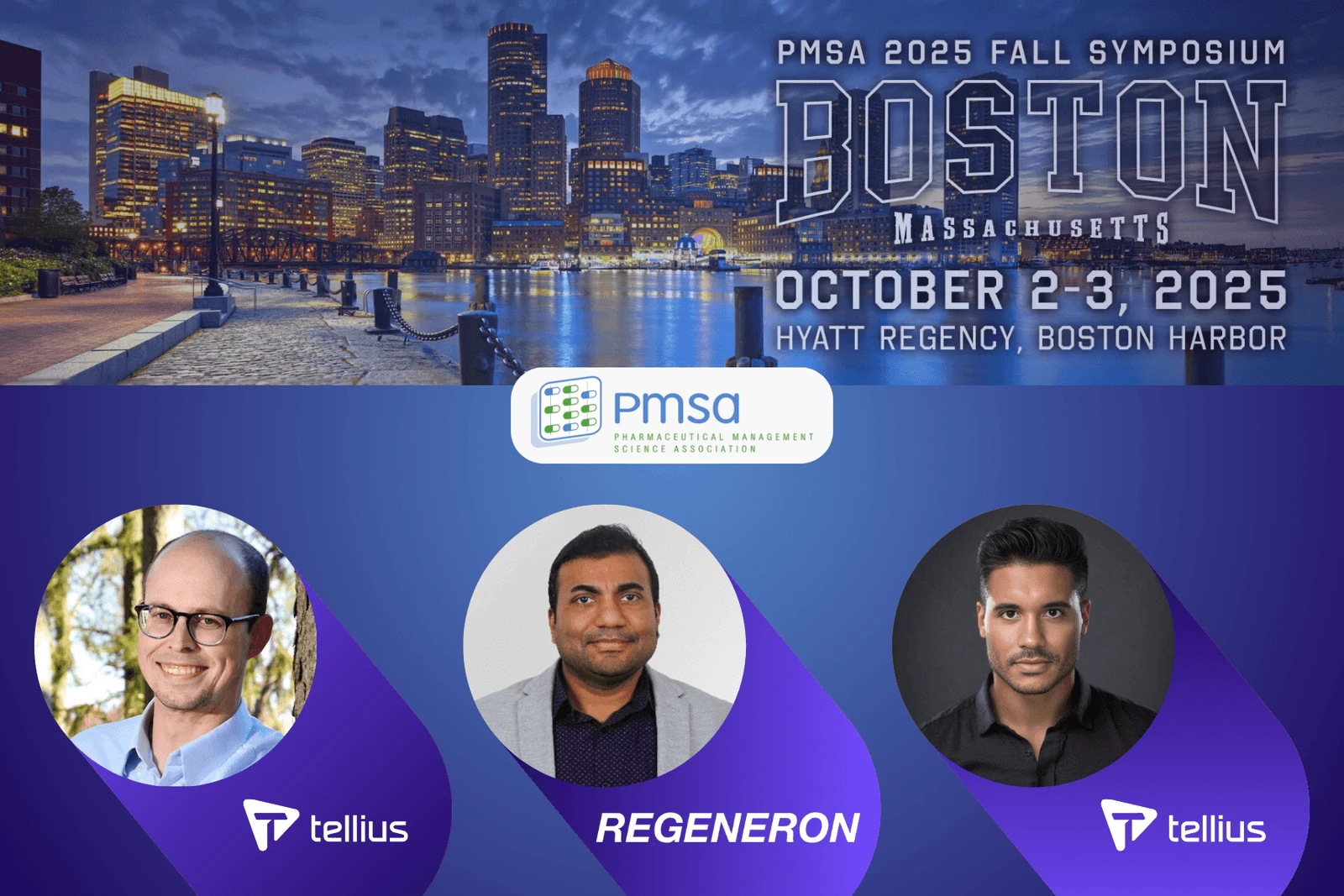
PMSA Fall Symposium 2025 in Boston

Join Tellius at PMSA Oct 2–3 for two can’t-miss sessions: Regeneron on how they’re scaling GenAI across the pharma brand lifecycle, and a hands-on workshop on AI Agents for sales, HCP targeting, and access wins. Discover how AI-powered analytics drives commercial success.

Branding
View All Resources
Close