

Pharma Chargeback Exceptions: How AI Agents Resolve Gross-to-Net Leakage
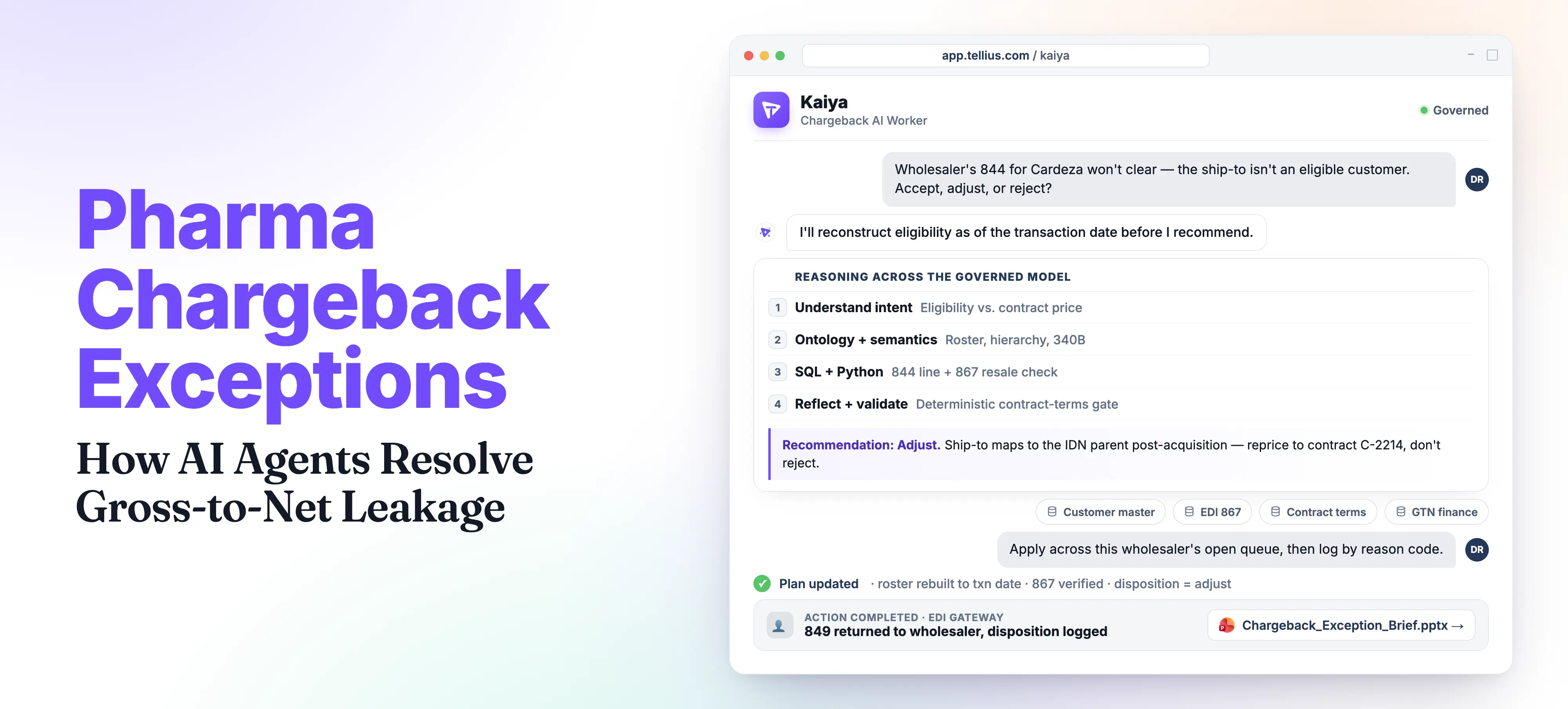

A chargeback exception is a wholesaler claim your revenue management system could not validate automatically—for example, the ship-to does not resolve to an eligible customer, the claimed price does not match the loaded contract, or the line resembles one you already paid. Each decision may be small, but the deduction base is not: Drug Channels Institute estimates that manufacturers' total gross-to-net reductions for brand-name drugs reached $416 billion in 2025, up from $356 billion in 2024. Those totals show the scale of the flows in which unresolved exceptions can accumulate. This article explains where leakage can enter the chargeback exception queue and how to resolve it one evidence-backed decision at a time.
How the pharma chargeback process works: EDI 844, 849, and 867
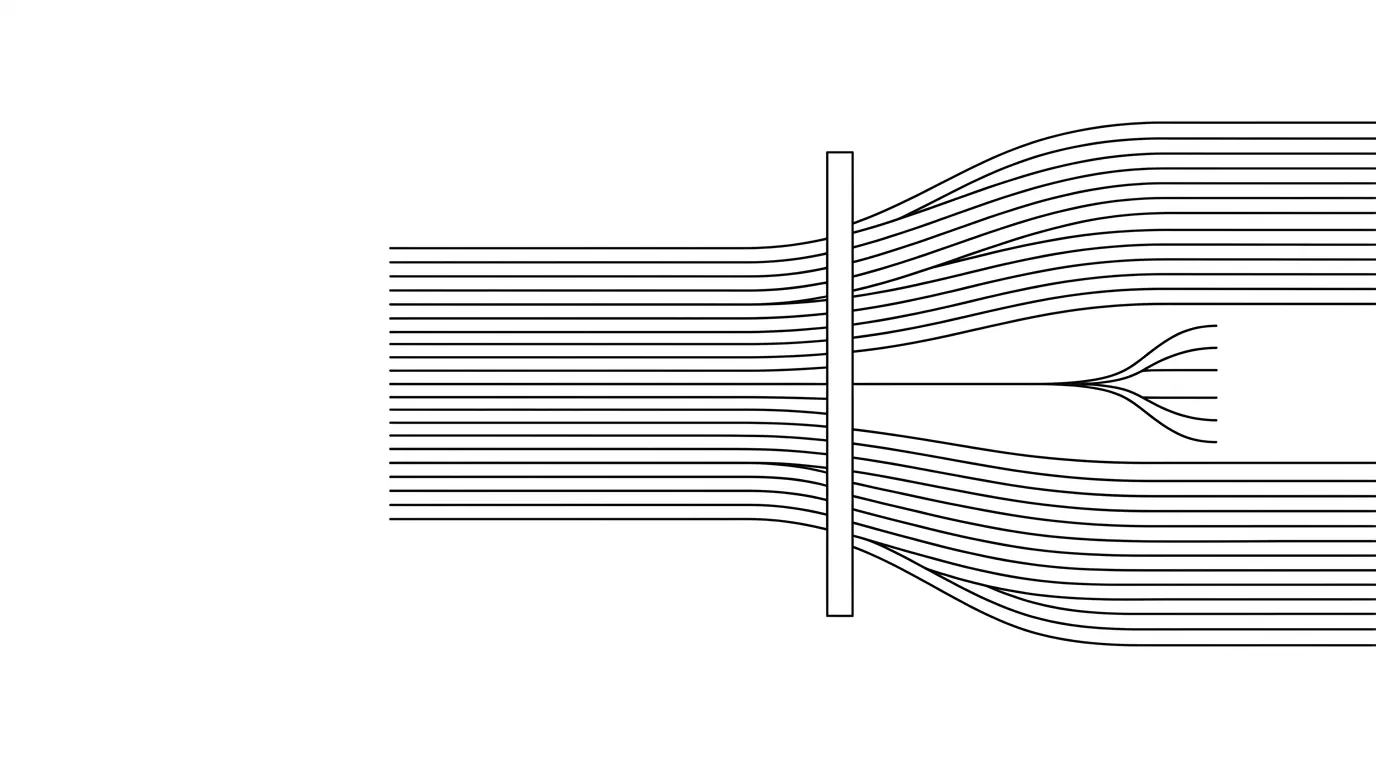
Consider the basic chargeback flow. A wholesaler buys at WAC, sells to an eligible indirect customer at the manufacturer's contract price, and requests the difference from the manufacturer. The claim arrives as an EDI 844, and the manufacturer returns a line-level EDI 849 response. The EDI 867 reports downstream product transfers and sales and can support reconciliation; it is not required to validate every 844 line. X12's transaction-set directory defines the three formats. Most claims match the contract, customer master, and price file and clear. The rest land in an exception workbench.
Where chargeback exceptions leak net revenue
Chargeback exceptions leak revenue in four ways.
- Low-value claims clear under an approval threshold. That is often a rational control, but it hides a recurring master-data or contract-loading defect when nobody aggregates the reason codes behind those approvals.
- Valid disputes miss their window. When a case ages in the queue until the contractual response period closes, the manufacturer loses the chance to act, and a dispute that was never opened never appears in recovery reporting.
- Time pressure produces the wrong disposition. A roster goes stale after an IDN acquisition, a contract price loads late, or a resubmission resembles a duplicate. The result is an invalid payment or an unnecessary rejection that creates rework with the three wholesalers controlling more than 90 percent of U.S. drug distribution by revenue.
- Cross-program signals stop at the handoff. A 340B duplicate discount occurs when a manufacturer provides a 340B discount and pays a Medicaid rebate for the same drug. A platform flags the suspected overlap; the related chargeback disposition and dispute outcome sit in another system. The control gap is the join across those records, not the initial flag.
What revenue management systems already validate automatically
Mature revenue management systems already automate most first-pass validation when the underlying data is clean. Model N, for example, says manufacturers can achieve greater than 98 percent clean first-pass rates with clean, accurate data in a single solution. The condition matters: the system checks the claim against the contract, customer master, and price file, but it can only apply the data and rules it has.
Straight-through validation asks whether the claim matches. Exception resolution asks why it does not. Answering requires reconstructing the roster as of the transaction date, using the 867 for reconciliation where relevant, checking whether a facility changed parents, and deciding whether to accept, adjust, reject, or escalate. That is investigative work, and it competes for analyst time against the queue's contractual deadlines.
Why exception alerts and managed services don't close the loop
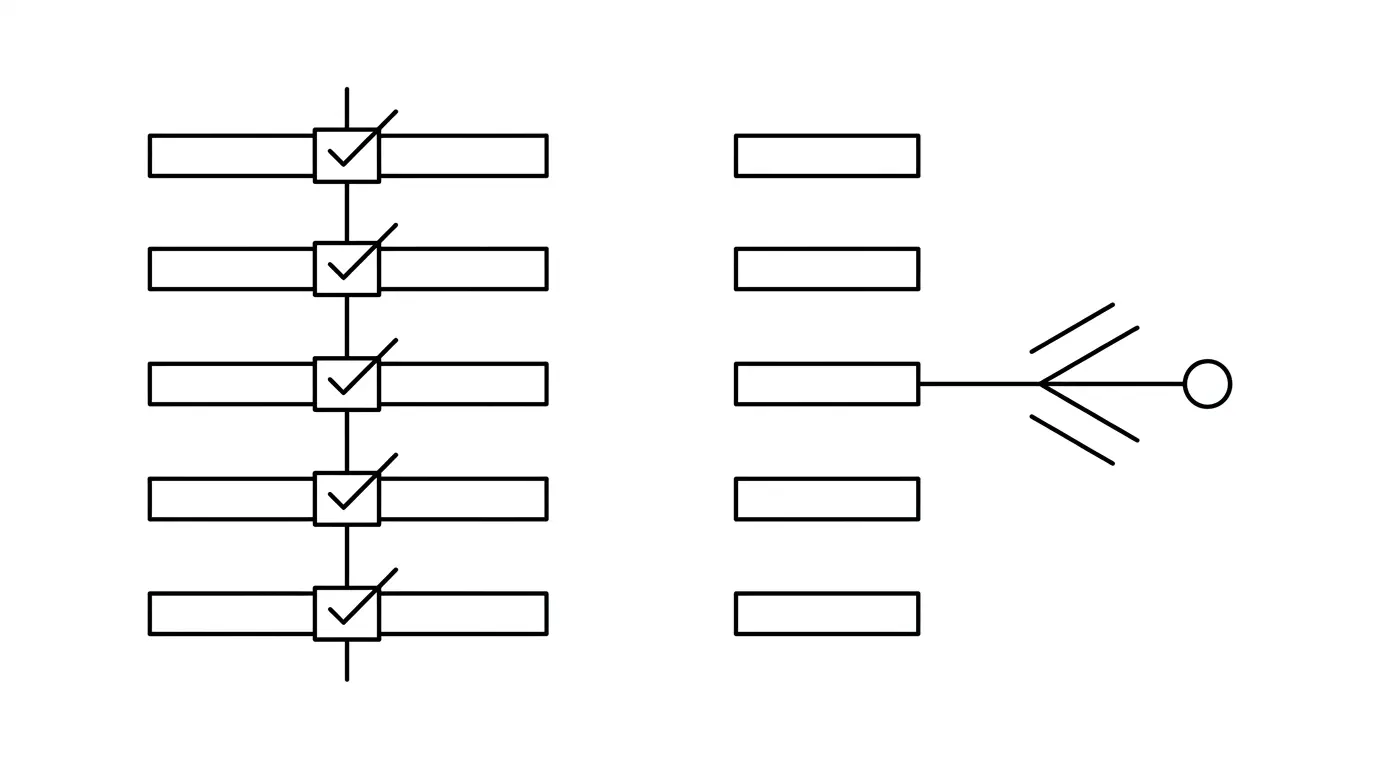
Spotting an exception is not the same as resolving it. Today's platforms validate claims, flag mismatches, assemble supporting context, prepare an 849, and route an approval. Duplicate-discount platforms likewise identify suspected overlap across 340B and Medicaid claims. But an alert does not close the loop: someone still has to determine why the records disagree, choose a disposition, respond within the applicable window, and record what ultimately happened.
Managed-service providers will do that work for a fee. IntegriChain, for example, advertises 844 receipt, 849 generation, reconciliation, and dispute resolution, backed by more than 350 managed-services personnel. That is a valid operating model. The tradeoff is that, unless decisions and outcomes are codified in the manufacturer's own systems, much of the operating knowledge remains with the provider.
The remaining opportunity is the work straight-through processing does not routinely resolve: cases that require investigation across the systems a manufacturer actually runs. Speed alone does not capture it. Connecting each disposition to its outcome, using that evidence to expand automation safely, and tracing recurring exceptions to the upstream defects creating them is what turns a cleared queue into a smaller one. That is where Tellius focuses.
Systems of record, managed services, and the exception-resolution layer
Manufacturers rarely choose between these three. Most run a revenue management system, buy some managed-service capacity, and still carry an exception queue. What separates them at evaluation is which one owns each step of a disputed line, and where the reasoning lives once the line closes.
Tellius sits in the third column. It reads what Model N or Vistex booked and validated, and does not re-book or re-validate it.
How an AI agent resolves a chargeback exception
Tellius treats each exception as an investigation, not just an alert.
In the scenario of a ship-to that does not resolve to an eligible customer, our Chargeback AI agent matches the wholesaler's customer identifier to eligibility on the transaction date, verifies the resale against the 867, checks for ownership changes, and proposes an evidence-backed disposition: accept under the claimed contract, adjust to the correct contract and price, or reject.
That answer requires sources that were never designed to line up:
- The claim sits in the revenue management system.
- Resale detail is in the EDI gateway.
- Price conditions and contract terms sit in the ERP or contracting system.
- Customer eligibility and hierarchy sit in rosters and master data, with NPPES and OPAIS able to corroborate provider identifiers and 340B participation where relevant.
No source can resolve the exception alone. The answer exists across them, interpreted under the contract's eligibility rules as of the transaction date.
Before anything is filed, a deterministic check tests the proposed disposition against the encoded contract terms and dates. A disagreement escalates to an analyst. Approved 849s return through the wholesaler's existing gateway, and every result is recorded by wholesaler and reason code.
Those outcomes govern how automation expands. Instead of relying on a model's confidence score, the manufacturer can require a defined case type, complete evidence, a minimum sample size, a measured success rate, and a dollar threshold before an 849 response is automated. The same history exposes recurring upstream defects, such as stale roster feeds or delayed membership files, so the source can be fixed and future exceptions prevented.
Pharma rebate disputes follow the same pattern
A global pharmaceutical company's managed-markets finance team receives thousands of PBM rebate invoices each month, with the evidence spread across internal and third-party data sources—and a contractual deadline for acting on them. Using Tellius, the team cut invoice analysis from three weeks to four days and identified more than $5 million a year in disputable rebate dollars that manual review had previously missed.
The mechanics differ from chargebacks. A rebate line depends on tier attainment, the eligible NDC list in effect at the time, carved-out units, or the administrative fee in the latest amendment. Headline-rate checks are comparatively easy; the recoverable dollars hide in the lines that require evidence from several systems to validate.
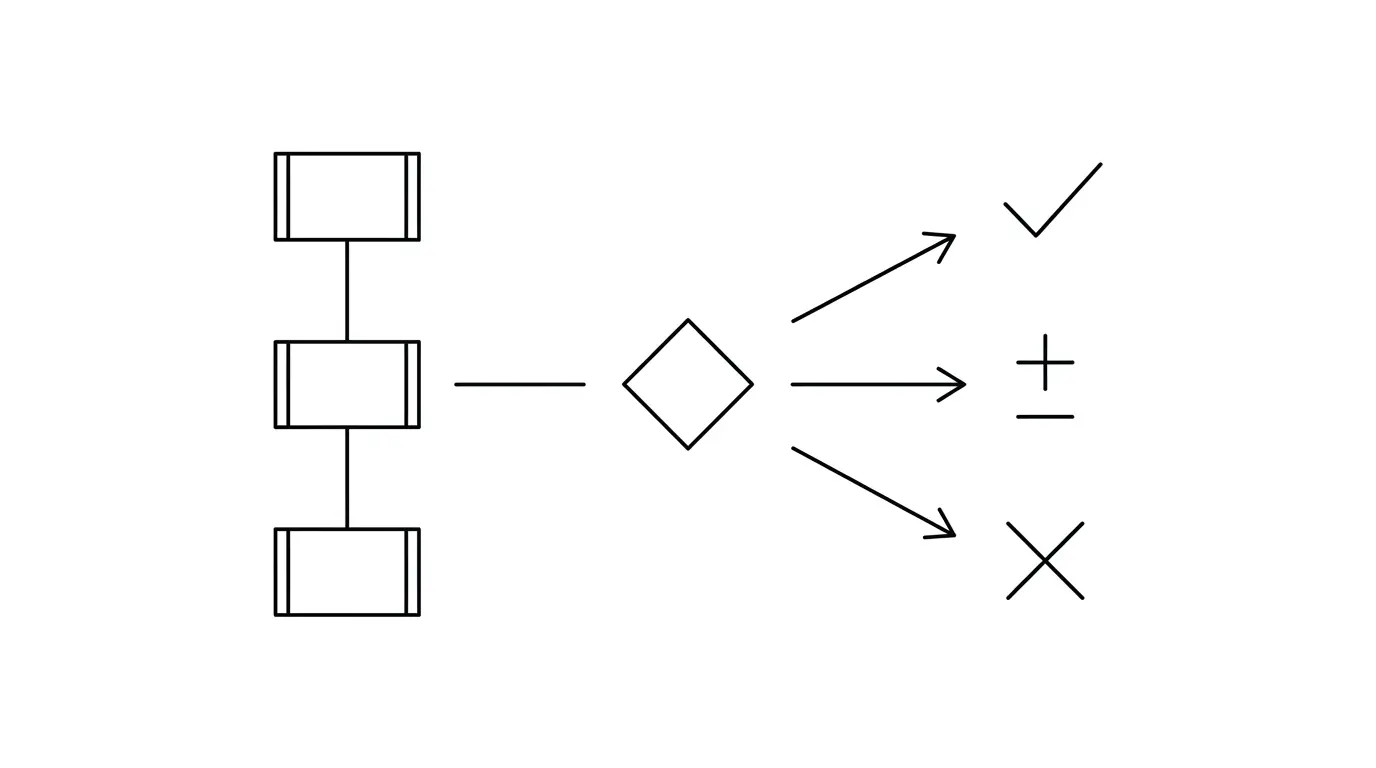
Rebates and chargebacks work differently, but the leakage follows the same pattern: gross stays steady, net moves, and the explanation is buried in deductions that no single system can fully explain. The job is to identify which line moved, determine whether it should have, and act before the dispute window closes.
How to build the business case from your own exception queue
The defensible business case does not start with an industry-wide leakage estimate. It starts with the manufacturer's own exception queue: claim volume and value, age, reason code, analyst handling time, approval thresholds, missed response windows, dispute recoveries, and repeat exceptions tied to the same upstream defect.
Run the AI agent in shadow mode against historical cases first. Compare its proposed dispositions with analyst decisions and subsequent outcomes, then quantify the value of faster handling, broader queue coverage, valid recoveries, avoided overpayments, and prevented repeat work. That creates an account-specific baseline finance and controls teams can audit before any production action is delegated.
For a wider look at how the GTN stack fits together, including where systems of record end and analysis layers begin, see our buyer's guide to GTN platforms and the companion piece on payer contract analytics.
Key terms: chargeback and gross-to-net glossary
Get release updates delivered straight to your inbox.
No spam—we hate it as much as you do!


A chargeback exception is a wholesaler chargeback claim (an EDI 844 line) that failed automated validation against the manufacturer's contracts, customer eligibility, or pricing, and requires human investigation before it can be accepted, adjusted, or rejected on the 849 response.
They land in an analyst workbench. Manufacturers approve claims below a review threshold, investigate higher-value or higher-risk claims, and prioritize cases approaching a contractual response deadline. The exact workflow depends on its controls, trading-partner agreements, and operating model.
A chargeback is a distributor's request to a manufacturer for the difference between its acquisition price and the contract price given to an eligible indirect customer. A rebate is calculated retrospectively under a payer, PBM, GPO, or government agreement, often from reported utilization. Both require validation, but they use different data, timing, counterparties, and dispute processes.
It should work alongside the revenue management system rather than in front of it, reconstruct the evidence as of the transaction date, propose a disposition with support a reviewer can trace, preserve human approval controls, record the result by wholesaler and reason code, and identify the recurring upstream causes behind repeat exceptions. Ask any vendor to show the evidence behind a single disposition and the outcome it produced.
AI can prepare and, within manufacturer-defined controls, return an 849 response through the existing gateway. A deterministic check should verify each proposed disposition against the applicable terms and dates, while cases outside the approved policy route to an analyst. Medicaid rebate and 340B disputes follow separate program-specific processes.
No. Those systems remain the system of record that books and validates chargeback claims. Tellius works the exceptions they could not clear, reading from the revenue management system, the EDI gateway, the ERP, and the customer master, then writing the disposition and its evidence back. When first-pass validation improves, the exception queue shrinks and there is less for the agent to do, which is the intended direction.
They work the same queue differently, and a managed service is a valid operating model with real people who know the work. The difference shows up in where the operating knowledge ends up: unless dispositions and outcomes are codified in the manufacturer's own systems, the reasoning stays with the provider and gets re-purchased every year. An agent running inside the manufacturer's systems accumulates that history in place. Manufacturers often run both, using the service for volume and the agent for the cases that repeat.
The first version usually works. A few joins across the claim, the roster, and the 867 will clear a recognizable class of exception. The cost arrives in the second year: maintaining roster reconstruction as membership files change, keeping contract terms encoded as amendments land, and proving to an auditor that the logic that ran in March is the logic in the binder. Build it when chargeback exception resolution is a capability the organization intends to staff permanently.
Chargebacks sit inside SOX-relevant revenue controls at most manufacturers, so deployment starts read-only. The agent proposes dispositions against historical cases, and those recommendations are measured against what analysts actually decided and what the outcome was. Automated responses begin only inside manufacturer-defined risk thresholds and expand as observed outcomes support them. The evidence pack behind each disposition and the approval policy stay under the manufacturer's control, and nothing is filed until a deterministic check tests the proposed disposition against the encoded contract terms and dates.
The read-only pass over historical exceptions comes first and is the fastest part, because it needs no write access. That pass is also the ROI model: compare proposed dispositions with what analysts decided, then size the opportunity from the value sitting in aged exceptions, the share of the queue that repeats against the same upstream defect, the recovery rate on disputes actually opened, and the rework a wrong disposition creates. Timelines usually gate on how quickly the roster, contract, and EDI feeds can be read, not on the model. Treat any vendor's industry-wide leakage estimate as a prompt to measure your own queue, not as a forecast.
AI Agents for Pharma Commercial Teams: The 2026 Field Guide to Use Cases, Vendors, and What's Actually Real

This field guide examines the AI agent use cases that are actually being deployed across brand analytics, field sales, market access, forecasting, omnichannel engagement, incentive compensation, and commercial operations. The guide compares leading vendors and deployment approaches, highlighting the differences between AI copilots, agent frameworks, agentic analytics platforms, and purpose-built commercial AI solutions.
.webp)
AI for Next Best Action in Pharma: Why Most Programs Fail (And What Actually Works)
Most pharma next-best-action programs promise AI-driven guidance for reps, but fall apart on bad data, missing context, and black-box models. This post breaks down why traditional NBA efforts stall, and what’s actually working: analytics-ready data products, a semantic layer that understands pharma metrics and entities, identity resolution to kill “ghost” HCPs, and agentic analytics that can investigate, validate, and recommend real next-best actions across HCP targeting, territory fairness, coaching, and omnichannel orchestration.