

What Is Agentic Analytics?
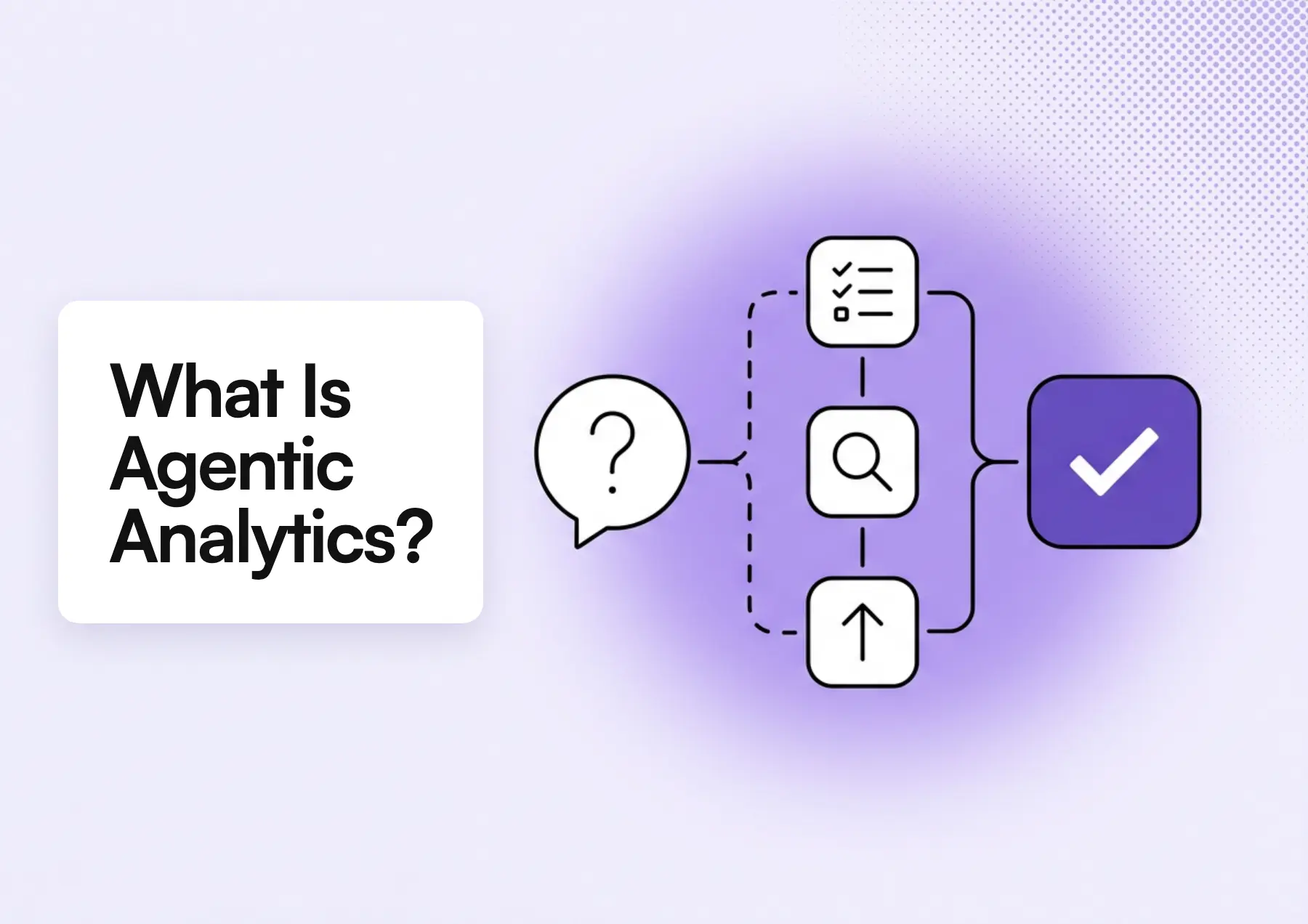

Agentic analytics is AI that plans and runs the multi-step analysis a person would otherwise stitch together by hand. It works on governed data and returns the root cause and a recommended next step for a person to approve. The definition rests on the work done, not on the AI acting by itself.
Agentic analytics systems reason, react and recommend with the context of the business behind them. Agents analyze the data, generate the findings, recommend a next step and act only when a person approves. In practice that moves a team from an insight to a business outcome. Instead of a chart showing that revenue fell, the team gets a short brief that says what changed, why it matters and what to do about it.
How agentic analytics differs from BI, search and chat assistants
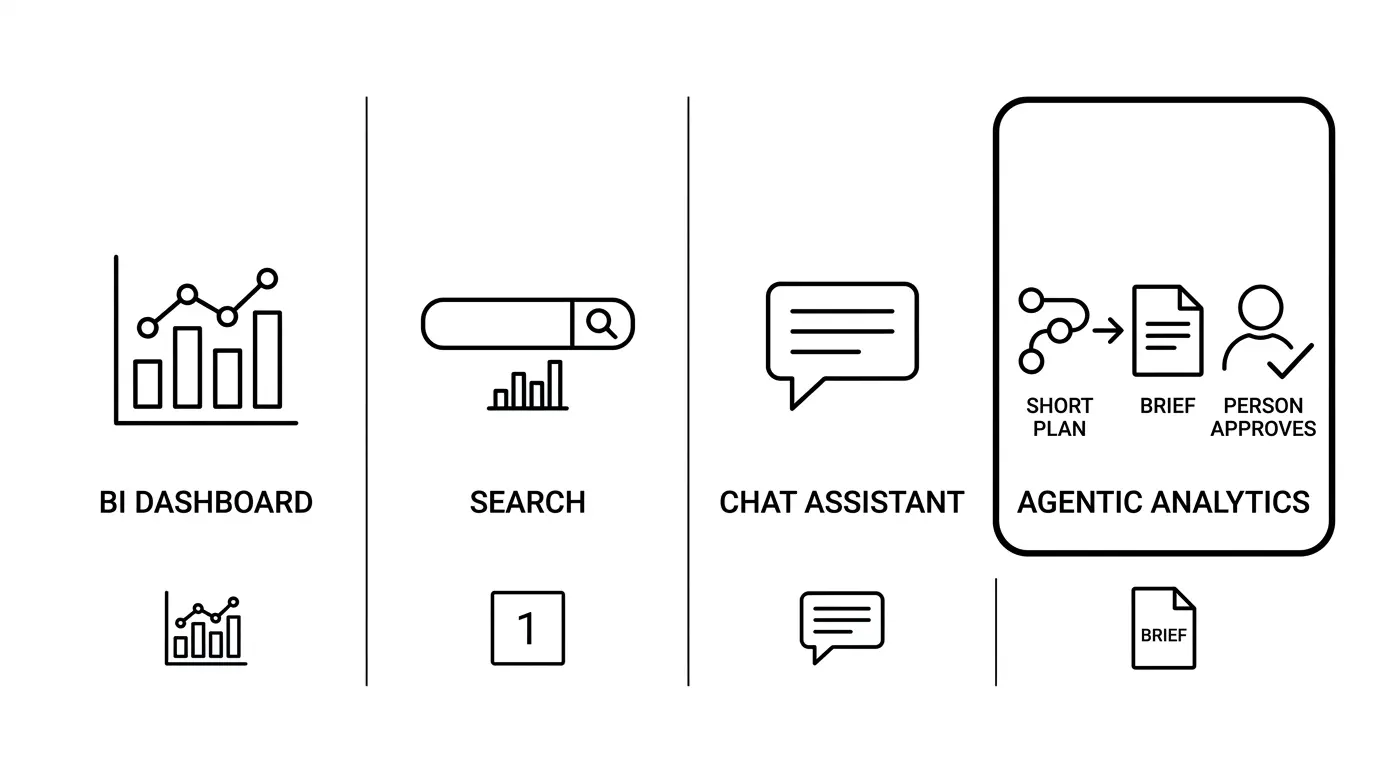
BI dashboards, search tools and chat assistants each answer a question. Agentic analytics runs the investigation behind it and hands back the result for a person to review.
How agentic analytics works
Agentic analytics rests on governed definitions, metadata retrieval, multi-step plans, memory a person saves, checks that catch errors, and queries that run where the data sits.
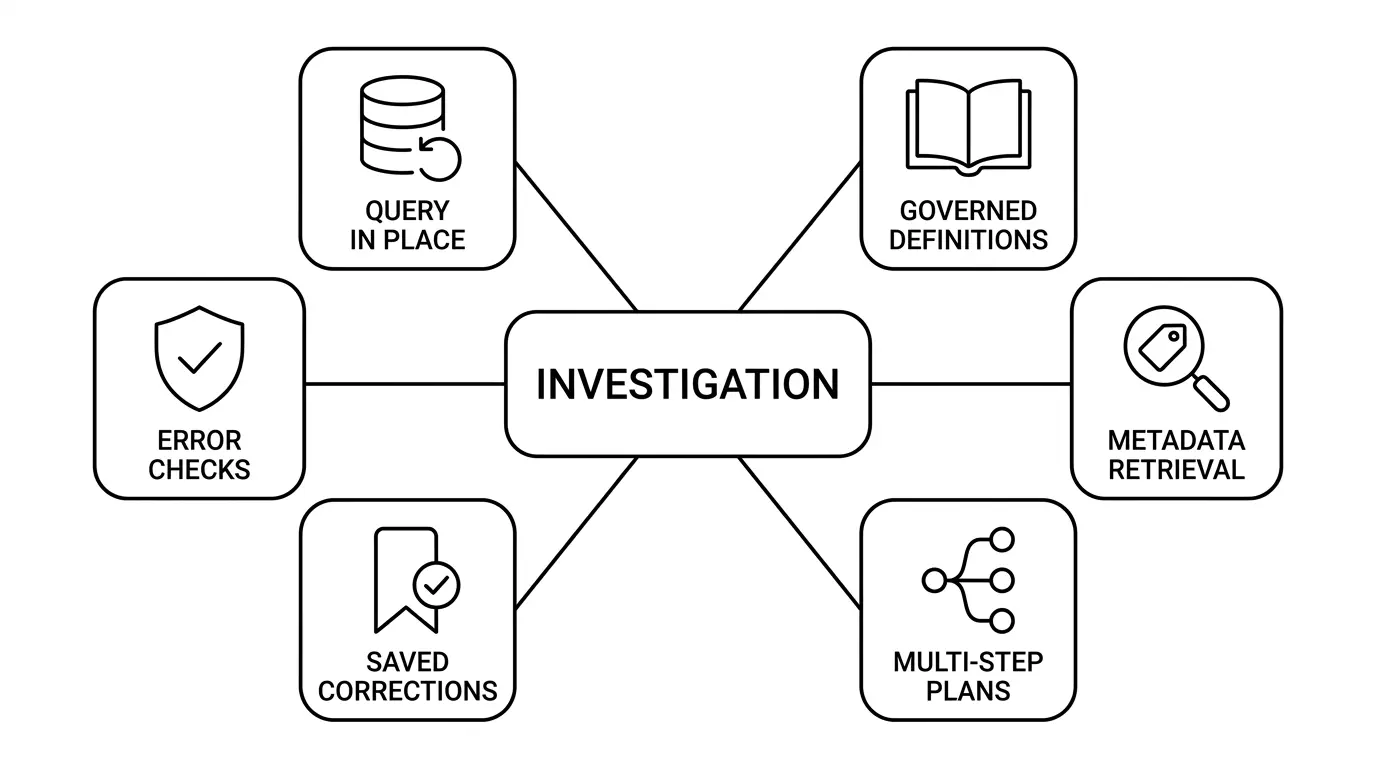
Governed definitions. An agent has to know what a metric means before it can explain a change in it. When someone asks "Why did NBRx drop in the West?", the system needs to know that NBRx means new-to-brand prescriptions, which table holds it and which filters apply. Kaiya answers from governed Business Views, and in 6.4 from Kaiya Context Models (rolling out): a versioned model of a live source's tables, joins, metrics and vocabulary that Kaiya, Apps and Missions answer from.
Metadata retrieval. Before writing a query, the agent pulls prior analyses, metric definitions and domain terms, so the plan starts from what the business already settled. In one Kaiya conversation, Kaiya can search your indexed documents alongside your governed data, cite each document claim to its passage, and read connected systems such as Salesforce through MCP.
Multi-step plans. A real question takes several steps: a trend, a comparison, a breakdown by segment, then an explanation. Deep Insights plans the investigation, checks the data first, and repairs a failed step. Once it becomes a Mission, the same SQL runs every time. Describe a recurring analysis in Kaiya chat, and Kaiya builds it as a Mission: ordered SQL, Python and summary steps you can review, edit and preview before you publish. A Mission's queries are written once, when it's created, and reused on every run, so only the inputs change and this Monday's number comes from the same SQL as last Monday's.
Memory a person saves. Without memory, every conversation starts over and the same correction gets made every week. Corrections a person chooses to save carry into later answers, skills set the team's playbook once, and Context Model suggestions are published only after the model's owner approves them.
Checks that catch errors. Answers lead with the result and the drivers behind it. In Deep Insights and Mission Preview, each figure traces to its query. Each answer shows how Kaiya got it (schema read, skills loaded, queries run). Summaries are checked against the data that executed. Writes show the operation, destination, rows and identity before anyone approves. Mission versions and run history record what ran and when.
Queries where the data sits. Tellius queries Snowflake, BigQuery and Redshift live, where the data sits, with no copy into Tellius. Other sources, including Databricks, load into Tellius's in-memory engine.
What agentic analytics does in practice
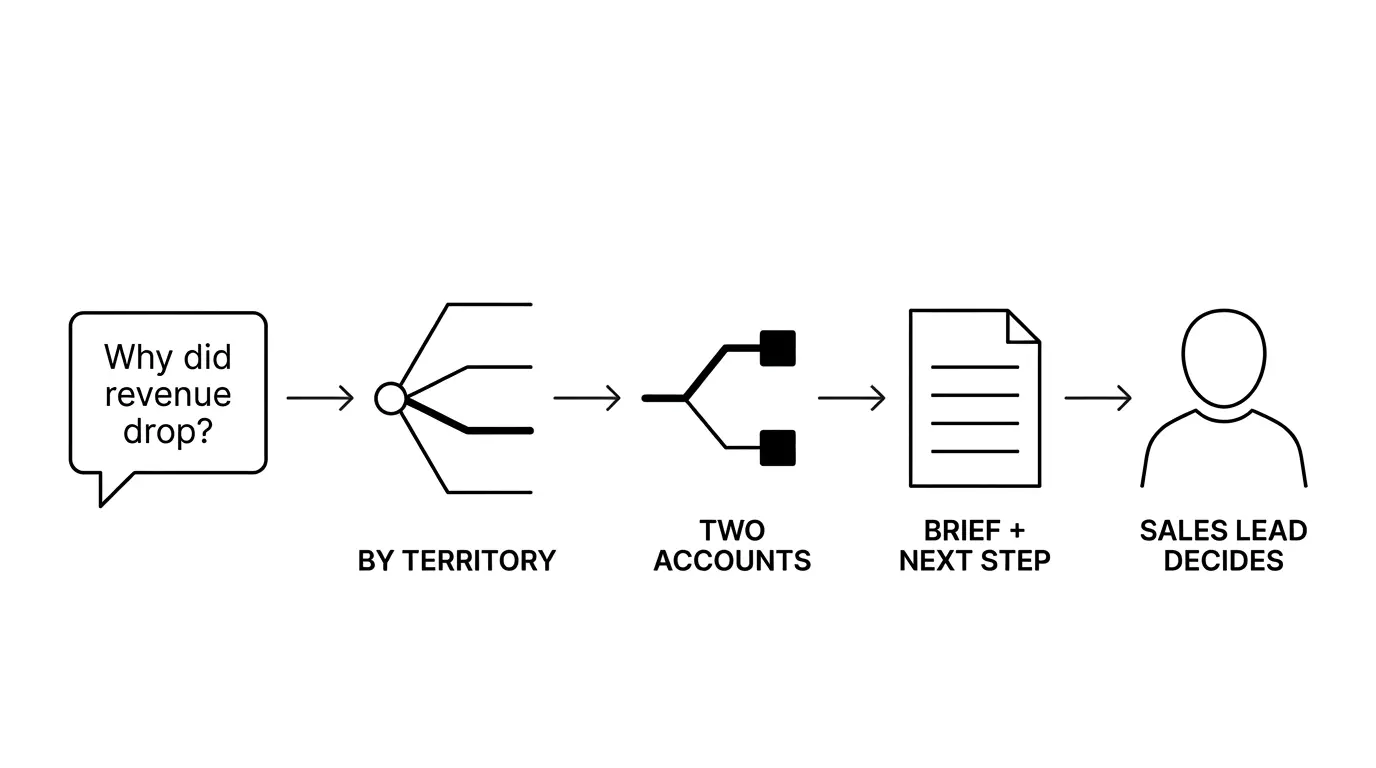
Here's an illustrative example. Revenue drops in one region. Instead of an analyst spending two days in the data, an agent breaks the drop down by territory, finds that most of it traces to one rep's territory after two large accounts slowed their orders, and suggests the sales lead prioritize the mid-market segment where that territory's pipeline is still healthy. The sales lead decides what to do.
Feed tracks the metrics you choose, flags anomalies, and links each alert to the analysis of what changed and why. A Mission can run that investigation on a schedule and deliver the brief. Kaiya writes the summary and delivers the finished brief by email, Slack or Teams, and Apps show live narratives beside the charts. When a question needs a forecast, Kaiya runs forecasts and other calculations in Python and shows the assumptions behind them. Predict builds AutoML models on your data.
The same pattern shows up across teams:
- Sales operations. A weekly brief on which territories are behind plan and why, ready before the regional call.
- CPG category management. Which products lost share by retailer and region, with price, promotion and distribution effects separated.
- Pharma market access. The accounts that lost preferred formulary status and the volume at risk, flagged by a Feed alert or a weekly Mission over your formulary data.
Where agentic analytics fails
Agentic analytics fails when the agent works from loose definitions, regenerates its logic every run, or acts without anyone checking. In its June 2025 forecast, Gartner said "Over 40% of agentic AI projects will be canceled by the end of 2027, due to escalating costs, unclear business value or inadequate risk controls."
Hallucination. A model with a partial view of the data fills gaps with a plausible column or join. Governed definitions narrow what it can guess, and figures traced to their queries let a person catch a wrong number before it ships. No vendor can promise an agent never hallucinates. What matters is whether you can catch it.
Drift. If the agent writes new SQL every run, a reworded question or a model update changes the answer while the data sits still. A recurring workflow should reuse the same SQL and change only its inputs.
Loss of control. People decide. When the work ends in another system, Kaiya shows the exact write (operation, destination, rows and identity) and runs it only after a person approves, as that person.
Analyst fear. Agents take the repetitive stitching: pulling sources together, rerunning the weekly numbers, the first pass at a "why" ticket. Analysts keep the questions that need judgment.
How agentic analytics got here
Each stage made data easier to reach, and each left the investigation to a person until agents.
- Static dashboards. Someone builds the view, and everyone reads the same chart.
- Search and NLQ. You type a question and get a chart, one query at a time.
- Chat assistants. You get a written answer, but each question starts over.
- AI agents. The multi-step investigation runs on governed data and comes back as a brief for a person to approve.
Where Tellius fits
Tellius gives business and data teams an AI worker that runs recurring investigations on governed data and delivers the finished brief. Describe the analysis once in Kaiya chat, review the steps, and it runs as a Mission with the same SQL every time, delivered to the people who need it. See how Tellius AI agents handle recurring work.
If you lead a data team deciding whether to build or buy, AI agents for data analysis covers what holds up in production. If you're comparing tools, compare AI data analysis agents side by side.
Get release updates delivered straight to your inbox.
No spam—we hate it as much as you do!


No. An AI agent is the software that plans and runs the steps. Agentic analytics is the practice of using agents for analysis: investigating why a number moved, on governed data, with a person approving the result.
No. Agents take the recurring stitching, and analysts keep the work that needs judgment. People still decide what the analysis means and what the business does about it.
Governed data with agreed definitions for the metrics that matter. Tellius queries Snowflake, BigQuery and Redshift live, where the data sits, with no copy into Tellius. Other sources, including Databricks, load into Tellius's in-memory engine.

Agentic Analytics Explained: From Questions to Autonomous Action

The next era of analytics is goal-driven, adaptive, and intelligent. Tellius brings this to life by combining deep analytics with conversational intelligence, multi-agent reasoning, and business-aware feedback loops. It’s not about replacing analysts—it’s about scaling intelligence across your business with a system that gets smarter every day.

AI Analytics & Agentic AI: Definition, Benefits, and Real-World Examples
This 2025 guide to AI analytics covers definition, architecture, and examples—plus how agentic AI with a semantic layer and orchestrated AI agents turns insights into approved action, reducing time-to-action and delivering measurable impact.