
AI Agents for CPG Commercial Analytics
They monitor. They investigate. They alert. You decide.
CPG commercial teams are drowning in data from Nielsen, Circana, Walmart Luminate, Kroger 84.51°, TPM systems, and internal sources—but starving for answers. By the time someone pulls together a promotion ROI analysis or tracks down a distribution void, the window to act has closed. AI agents change this equation: they monitor your business continuously, investigate when metrics move, and surface insights before you ask.
Tellius is an agentic analytics platform purpose-built for CPG commercial teams. It combines conversational analytics—where trade, category, brand, and sales teams ask complex questions in plain English and get governed, consistent answers—with agentic intelligence, where AI agents monitor your business 24/7, detect meaningful changes, investigate root causes, and deliver insights before you ask.
Unlike generic BI tools or AI platforms that require constant hand-holding, Tellius understands syndicated data hierarchies, trade promotion mechanics, distribution metrics, and CPG data complexity natively. It connects Nielsen, Circana, Walmart Luminate, Kroger 84.51°, TPM systems, and internal data into one governed layer—then explains what's happening, why, and what to do next.
The Problem
The part of CPG that everyone pretends is fine

Trade promotion ROI takes 2–3 weeks to calculate. By then, the money's spent and the same losing events are already planned for next quarter.
Distribution gaps and out-of-stocks persist for weeks before someone manually reconciles authorization files with POS data. Every day is lost sales no one quantified.
Category reviews consume 4–6 weeks of prep—pulling data from five systems, reconciling hierarchies, building PowerPoints. The insights are stale before you present.
Leadership asks why share dropped. Retailers ask why velocity declined. The answer is always "I'll get back to you"—which means the conversation has already moved on.
Finance calculates promotion ROI one way. Sales calculates it another. No one trusts either number, so debates replace decisions.
Competitive threats surface at quarterly reviews. By the time you notice a competitor gaining distribution or share, they've had 6 weeks to establish momentum.
Early detection is impossible at manual analysis speed. So everyone operates reactively and calls it "normal."
What is Agentic Analytics for CPG Teams?
CPG commercial teams need fast, trusted answers across trade promotion performance, distribution gaps, category dynamics, brand share movements, and retailer-specific execution.Today, those answers live in Nielsen exports, Circana workbooks, Walmart Luminate queries, TPM systems no one fully trusts, and PowerPoint decks assembled by hand. Every "why did share drop?" question triggers days of data stitching, hierarchy reconciliation, and assumption-testing.
Agentic analytics unifies syndicated, retailer, and internal data into one governed model, delivers instant root cause explanations through conversational interfaces, and deploys AI agents that monitor your business 24/7—detecting distribution voids, flagging underperforming promotions, and surfacing competitive threats before quarterly reviews.
Start where it hurts most
Analytics Solutions for Every Commercial Function
Trade Promotion Analytics
Know which promotions actually made money. AI calculates lift, incrementality, and ROI for every event—flagging underperformers while spend reallocation is still possible. Identify the 60-70% of promotions losing money before the quarter ends.
Category Management Analytics
Turn 6-week reviews into same-day answers. AI delivers assortment recommendations, SKU rationalization modeling, and retailer-ready category insights on demand. Quantify incrementality instead of guessing.
Distribution & Supply Chain Analytics
Find the $10M you're losing to empty shelves. AI identifies voids, tracks on-shelf availability, and delivers execution intelligence in days instead of weeks. Prioritize by opportunity, not just count.
Brand Performance Analytics
Know why your numbers changed before anyone asks. AI decomposes market share into distribution, velocity, and price drivers—and monitors competitive dynamics continuously. Explain share movements in seconds.
Retailer Analytics
Walk into every meeting with better data than the buyer. AI delivers account-specific performance, competitive positioning, and JBP-ready insights on demand. Answer retailer questions in real-time.
⚡
Two Powerful Approaches to Analytics Transformation
Two Powerful Approaches
Combine
AI Analytics
Ask questions in plain English, get instant answers. "What was ROI on last month's Walmart promotions?" "Why did share drop at Kroger?" "Which SKUs should we propose adding at Target?" No SQL, no analyst queues, no 3-week wait. The semantic layer understands CPG vocabulary—TPR, BOGO, ACV, TDP, lift, incrementality—so queries don't require translation. Revenue Growth Managers, Category Managers, and Key Account Managers self-serve the analysis that used to require analyst projects.
Agentic Analytics
AI agents monitor your business 24/7 and surface insights before you ask. Promotion trending below breakeven? Alert on Day 3, not Week 3. New void detected? Prioritized by opportunity and routed to field teams. Competitor gaining share? Flagged while response is still possible. Agentic workflows replace the manual monitoring that no one has time to do—catching problems early and recommending action while outcomes are still changeable.
Why Tellius
AI That Already Speaks CPG
60-90
CPG-Native Semantic Layer

37
Governed Definitions

Validated Insights

Works on Existing Infrastructure

Skeptical? Good. Start Here.
Real Questions from CPG Commercial Leaders
1. What is AI-powered agentic analytics and how is it different from traditional BI?
Traditional BI tools show you what happened—dashboards displaying last month's numbers. You ask questions, wait for reports, and hope someone notices when metrics move. AI-powered agentic analytics inverts this model: AI agents monitor your business continuously, detect meaningful changes, investigate root causes autonomously, and surface insights before you ask.
For CPG commercial teams, this means promotion ROI flagged while events are still running, distribution voids detected within days of occurrence, and competitive share shifts surfaced weeks before quarterly reviews. The difference isn't just faster answers—it's answers you didn't know to ask for, delivered when they can still change outcomes.
AI is the enabler that makes agentic analytics possible. Without AI's ability to learn patterns, detect anomalies, and generate explanations automatically, continuous monitoring at scale would require armies of analysts. AI agents do what humans can't: watch everything, all the time, and surface only what matters.
2. How do AI agents monitor CPG commercial metrics continuously?
AI agents are configured with monitoring rules that reflect what matters to your business. For trade promotion, agents track in-flight events against expected lift curves and flag underperformers by Day 3-4 rather than waiting for post-event analysis. For distribution, agents compare authorized stores to selling stores daily and flag new voids immediately. For competitive intelligence, agents monitor share, distribution, and pricing changes and alert when competitors cross meaningful thresholds.
The agents run continuously against your connected data—syndicated feeds refreshing weekly, retailer data updating daily where available, and internal data flowing from TPM and ERP systems. When an agent detects something noteworthy, it generates an alert with context: what changed, how significant it is, what likely caused it, and what action might be warranted.
3. What data sources does Tellius connect for CPG analytics?
Tellius connects the full CPG data ecosystem. Syndicated data from Nielsen (Connect, Answers) and Circana (Unify) provides market context—share, distribution, velocity, pricing trends. Retailer-specific platforms including Walmart Luminate, Kroger 84.51°, Target Roundel, and Amazon Retail Analytics provide account-level sales, inventory, and shopper insights.
TPM systems (SAP TPM, Exceedra, Anaplan, or custom) provide promotion event definitions and trade spend. Internal ERP systems provide shipment, inventory, and order data. Panel data from Numerator or NIQ provides shopper behavior and source-of-volume analysis.
The platform harmonizes product hierarchies across these sources automatically—mapping syndicated UPCs to retailer item numbers to internal SKUs—so you can analyze across sources without manual reconciliation projects.
4. How long does implementation take for CPG agentic analytics?
Implementation typically takes 8-12 weeks, with first value arriving earlier. Weeks 1-3 focus on data integration—connecting syndicated feeds, retailer platforms, and internal systems. Weeks 4-6 cover semantic layer configuration—defining your brand hierarchies, competitive sets, and metric definitions so the platform understands your business. Weeks 7-9 involve user enablement and workflow integration. Weeks 10-12 focus on agent configuration and validation.
First value—basic dashboards and query capability—typically arrives around Week 5-6. AI agent monitoring activates progressively as data connections mature. Most teams see meaningful ROI within the first quarter post-deployment.
5. What ROI should CPG companies expect from AI-powered analytics?
ROI comes from four sources. First, trade spend improvement: AI identifies losing promotions and enables reallocation to winners, generating 10-15% improvement in trade ROI—on a $300M budget, that's $30-45M in recovered value annually.
Second, distribution recovery: AI finds and flags voids, out-of-stocks, and execution gaps, recovering 2-3% of lost sales—typically $10-20M for mid-sized CPG companies.
Third, time savings: AI automates the data reconciliation and analysis that consumes 60-70% of analyst time, redirecting hundreds of hours toward strategic work rather than data wrangling.
Fourth, decision speed: AI answers "why" questions in seconds rather than weeks, enabling faster response to competitive threats and market changes.Most organizations see payback within 6-9 months.
6. Who uses agentic analytics in CPG organizations?
Multiple functions benefit from different capabilities. Revenue Growth Managers use conversational analytics to query trade promotion performance and AI agents to monitor event ROI. Category Managers use it for assortment analysis, SKU rationalization modeling, and retailer review preparation. Sales and Key Account teams use it for JBP preparation and real-time retailer intelligence during meetings.
Supply Chain and Demand Planning use distribution analytics for void detection, OSA tracking, and demand signal integration. Commercial Leadership uses it for business review preparation and competitive intelligence. Finance uses it for gross-to-net forecasting and trade spend validation.
The platform serves both self-service users (asking questions directly) and power users (configuring agents and building workflows).
7. Can non-technical users ask AI questions in plain English without analyst support?
Yes. The AI-powered semantic layer understands CPG vocabulary—syndicated metrics (ACV, TDP, velocity), trade terminology (TPR, BOGO, lift, incrementality), retailer names and hierarchies, and your specific brand and category structure. Users ask questions like "What was the ROI on Q3 Walmart beverage promotions?" or "Why did our share decline at Kroger last period?" and get instant answers.
The key is that the semantic layer has been configured with your specific business context—your brand names, your competitive sets, your retailer naming conventions. This isn't a generic LLM that might hallucinate CPG terms; it's a purpose-built AI analytics platform that understands how your data is structured and what questions make sense against it.
8. How is Tellius different from building CPG analytics on Snowflake or Databricks?
You can build CPG analytics capabilities on your data platform, but expect 12-18 months before commercial teams can actually use it. Custom builds require integrating syndicated, retailer, TPM, and internal data with hierarchy harmonization; building semantic layers that understand CPG metrics; creating baseline models for promotion lift and incrementality; developing user interfaces non-technical users can navigate; and maintaining all of this as data sources evolve.
Tellius provides pre-built CPG connectors, semantic understanding of trade and category vocabulary, validated incrementality models, conversational interfaces, and agentic monitoring—deployed in 8-12 weeks instead of 12-18 months. It runs on your existing Snowflake or Databricks infrastructure, so you get purpose-built capability without moving your data.
Build if you have 18+ months runway and dedicated data engineering. Deploy Tellius if you need CPG analytics this year.
9. What questions should we ask vendors when evaluating CPG analytics platforms?
Data integration: Can you connect Nielsen/Circana syndicated data, Walmart Luminate, Kroger 84.51°, and major TPM systems? How do you handle hierarchy differences across sources?
Semantic understanding: Does the platform understand CPG vocabulary natively (lift, incrementality, ACV, TDP), or does it require extensive configuration to recognize basic metrics?
Agentic capability: Can AI agents monitor metrics continuously and alert proactively, or does the platform only answer questions when asked?
User experience: Can Revenue Growth Managers and Category Managers ask questions in plain English, or do they need analysts to build reports?
Time to value: How long until commercial teams can actually use the platform? What does the implementation timeline look like?
Vendors who demonstrate with your actual data—showing real analysis on your brands at your retailers—are worth serious consideration.
10. What makes Tellius purpose-built for CPG commercial analytics?
Three things differentiate Tellius from generic analytics platforms. First, semantic understanding of CPG data: the platform knows the difference between syndicated and retailer data, understands trade promotion mechanics, recognizes that ACV and TDP mean specific things, and doesn't require months of configuration to answer basic CPG questions.
Second, pre-built connectors to CPG data sources: Nielsen, Circana, Walmart Luminate, Kroger 84.51°, and major TPM systems connect without custom integration projects. Hierarchy harmonization happens automatically.
Third, CPG-specific analytical models: promotion lift calculation, incrementality modeling, void detection, and share decomposition are built in—not capabilities you need to construct from scratch.
Tellius was designed for CPG commercial analytics. It's not a generic BI tool adapted for CPG; it's a platform that understands your business from day one.
Stop Waiting for Answers. Start Getting Them Before You Ask.
AI agents don't wait for analyst requests. They monitor your trade promotions, distribution, categories, brands, and retailer relationships continuously—and surface insights while outcomes are still changeable.
Breakthrough Ideas, Right at Your Fingertips
Dig into our latest guides, webinars, whitepapers, and best practices that help you leverage data for tangible, scalable results.
.webp)
How Market Access Teams Verify Contracted Access Across Eligible Plans

Contracted access doesn’t guarantee that every eligible payer plan implements the agreed terms. This guide shows pharma market access teams how to verify contract clauses against plan-level policies, books of business, benefits, indications, and effective dates. Learn how to distinguish confirmed matches from implementation gaps, exclusions, and unresolved cases—and build an evidence-backed account brief that gives payer teams a clear path to resolution.
.webp)
Why Invoices Get Blocked in Three-Way Matching, and How to Resolve Them
Blocked invoices often persist because the evidence needed to resolve them is scattered across invoices, purchase orders, receipts, and contracts. This guide explains how to resolve three-way match exceptions by linking records at the line level, identifying root causes and owners, validating prices against governing contracts, and routing corrections for review. It also shows how AI-powered spend validation can assemble evidence, surface discrepancies, and help AP and procurement teams clear exceptions faster while maintaining human approval.
.webp)
Budget vs. Actual: How to Verify a Favorable Variance Before You Reforecast
A favorable budget variance isn’t automatically a saving. This guide shows FP&A teams how to verify budget vs. actual variances before reforecasting—reconciling GL data, distinguishing timing from permanent changes, tracing missing spend, and documenting open items. It also explores how AI-powered variance workflows can bring evidence together, investigate drivers, and draft finance commentary while keeping forecast decisions under human review.

AI-Native Analytics at Launch Scale | PMSA Agios Full Webinar
Watch the Agios Pharmaceuticals PMSA webinar and see how AI-native analytics is helping commercial teams accelerate insights at launch scale. The discussion explores how AI can streamline analysis, uncover performance drivers, and help pharma teams make faster, data-driven decisions.
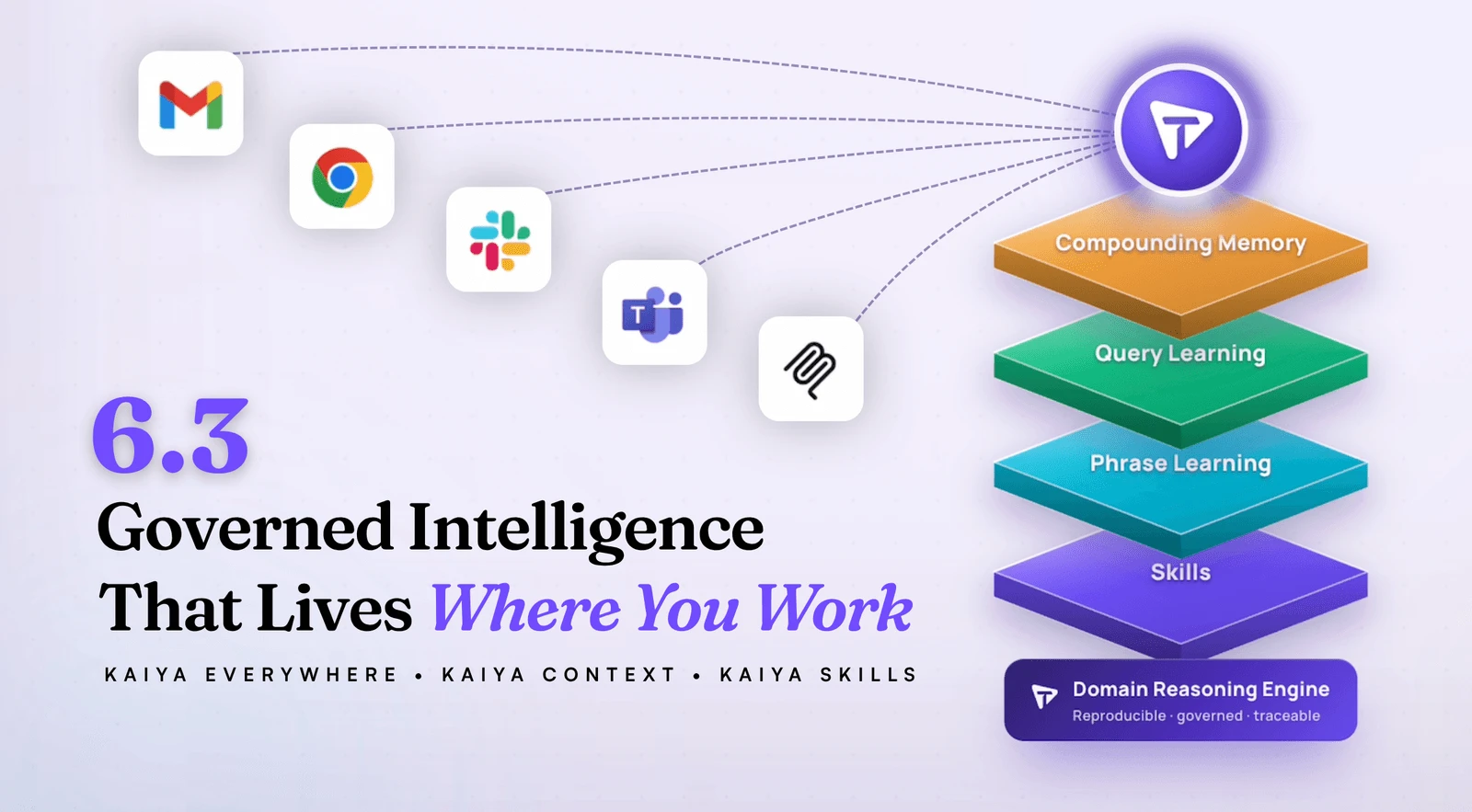
Tellius 6.3: Kaiya Everywhere, Grounded in Your Business
AI answers are only useful when they're grounded in your business and available where decisions actually happen. See how Tellius 6.3 delivers fast, traceable insights across pharma, CPG, RevOps, and FP&A — right in the tools your team already uses.

PMSA Webinar: Proactive Pharma Intelligence—A Practical Blueprint
See how pharma teams are using agentic AI to collapse the data-to-insight bottleneck—turning claims, contracts, and sales data into governed analytics models in one conversation instead of weeks in queue.
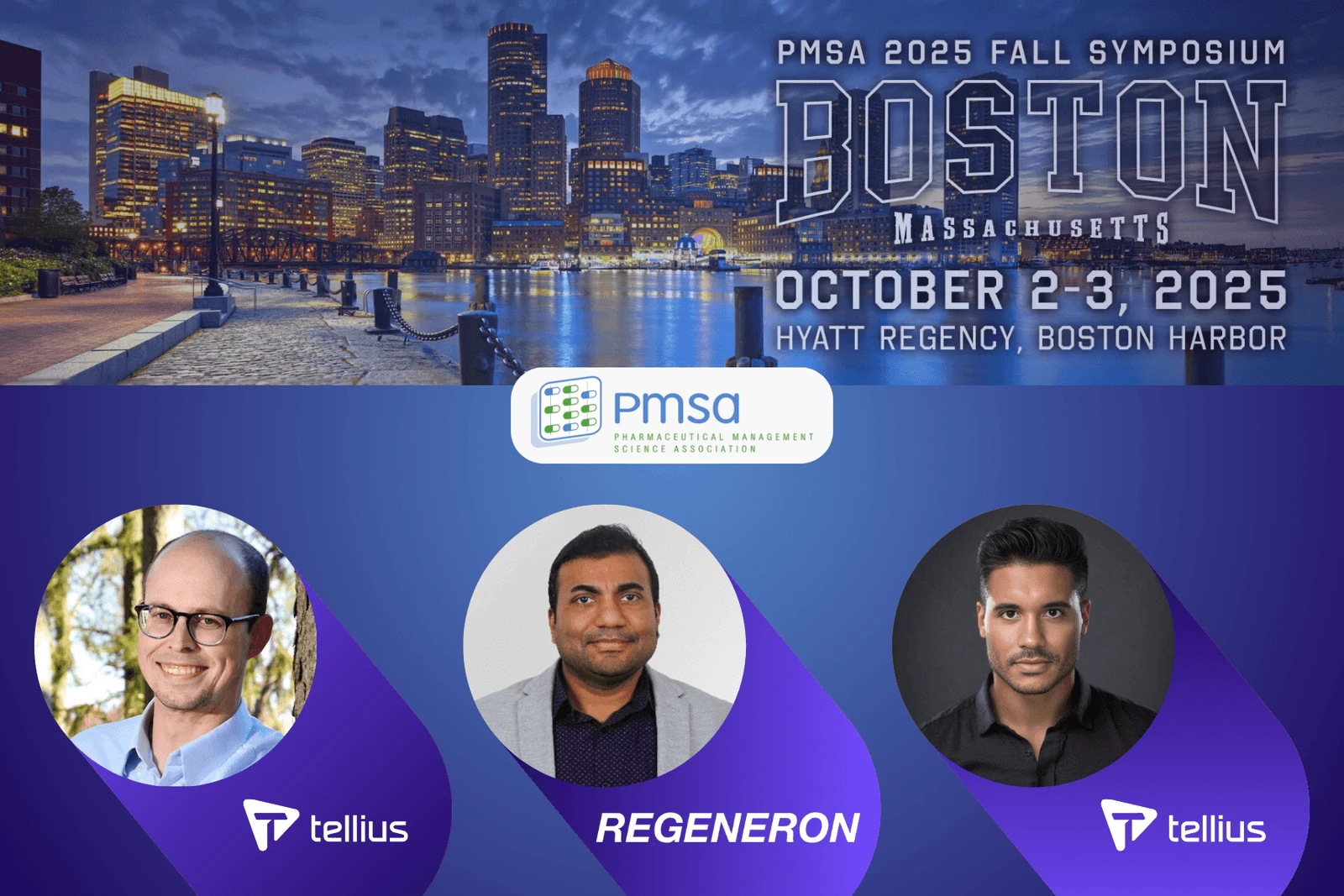
PMSA Fall Symposium 2025 in Boston
Join Tellius at PMSA Oct 2–3 for two can’t-miss sessions: Regeneron on how they’re scaling GenAI across the pharma brand lifecycle, and a hands-on workshop on AI Agents for sales, HCP targeting, and access wins. Discover how AI-powered analytics drives commercial success.
.webp)
Tellius AI Agents: Driving Real Analysis, Action, + Enterprise Intelligence
Tellius AI Agents transform business intelligence with dedicated AI squads that automate complex analysis workflows without coding. Join our April 17th webinar to discover how these agents can 100x enterprise productivity by turning questions into actionable insights, adapting to your unique business processes, and driving decisions with trustworthy, explainable intelligence.